
Crypto Coins to Mine: How to Pick the Right Ones and Stay Profitable

Crypto Coins to Mine: How to Pick the Right Ones and Stay Profitable
If you are comparing crypto coins to mine, the hard part is not finding a list. It is checking whether your machine, power price, pool, and coin network line up. Difficulty, coin prices, block rewards, and hardware supply can change. A mine can show coins coming in while your money moves the other way after power and other costs.
I’d start with a calculator, not a ranking. The useful question is not “Which coin pays the most?” It is “What can this machine earn after every cost?” Check the coin, algorithm, power draw, cooling, pool fee, and route to sell or hold the payout. If those numbers do not work, another coin will not save the setup.
What Crypto Mining Actually Does
Mining is separate from sending or receiving crypto. On a proof-of-work network, miners collect transactions, check them against the rules, and sort them into a candidate block. They then change a value called a nonce and run hash calculations until one result meets the network’s target. The miner that finds it adds the block and receives the block reward plus any transaction fees.
When people ask what Bitcoin mining is , this is the short version: Bitcoin miners spend computer work to help add blocks to Bitcoin’s ledger. A what a crypto mine does can sound strange because a mine is both the process and, often, the building full of machines. Proof of stake works differently because validators lock coins rather than compete through hashing.
Terms to know before comparing coins
- Algorithm: The rule that tells mining software what kind of hash work to perform.
- Hash rate: The number of hash attempts a machine or network can make each second.
- Difficulty: The network’s target for how hard it is to find a valid block.
- Block reward: The new coins paid for a block, apart from transaction fees.
- Mining pool: A group of miners that combines hashing power and shares a reward.
Mining checks transactions, groups them into blocks, secures the network, and issues new coins under a proof-of-work system.
Why a Coin Ranking Goes Stale
A ranking is a snapshot, not a promise. It can point out coins worth researching, but it cannot include every hardware cost, power rate, pool rule, or market change. A coin may rank well because of its block reward and fall once more miners join. Its price may rise enough to offset that change, or it may not. That is why a list is only the first pass.
Five numbers to check before trusting a list
- Network difficulty and how much it can change.
- The block reward and any planned reduction in that reward.
- Your machine’s measured hashrate and power draw.
- Electricity price, cooling cost, and other running costs.
- The coin’s sale price, market depth, and exchange support.
The source material also has conflicts that a reader should not paper over. One Ethereum Classic profile calls it GPU-mineable, then says it moved to proof of stake. BlockDAG material makes production claims for dedicated miners and a phone app, but those figures do not include a local power price or a net payout. I would treat them as claims to test, not proof of profit. A neat calculation built on weak inputs is still a bad calculation.
Mining Hardware Comes First
Mining machines fall into three main groups. A CPU is a general computer processor. A GPU is a graphics processor that can run many tasks at once. An ASIC is built for one algorithm or a small family of algorithms. ASICs tend to do more hashes per watt for their chosen job, but they cannot switch to an unrelated coin.
What each type of mining machine can do
- CPU: General-purpose hardware that can mine supported coins such as Monero with RandomX.
- GPU: Useful for many parallel-friendly algorithms, including Ravencoin’s KAWPOW.
- ASIC: Built for a narrow target, such as Bitcoin’s SHA-256 or Litecoin’s Scrypt.
- Multi-algorithm machine: May support related algorithms, but the maker’s exact list still matters.
- A good cryptocurrency miner fits the chosen coin and power budget, not just a large number on a sales page.
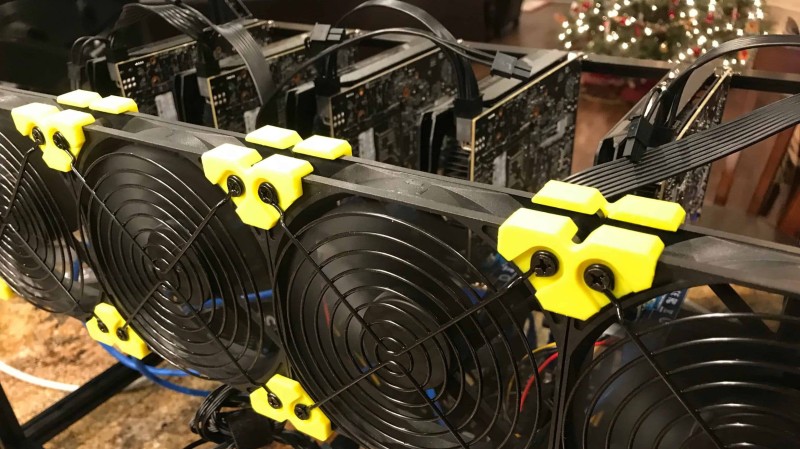
Search results for cryptocurrency mining machines mix new rigs, used graphics cards, and dedicated devices. A home mining machine is useful only when its algorithm, power draw, and cooling match your plan. Check the socket, power supply, room temperature, and noise before buying. A machine can produce plenty of hashes and still lose money at your electricity rate.
Buy the coin first, then buy a machine that can mine it. Hardware does not care about your hopes.
Match the Coin to Its Algorithm
Each proof-of-work network uses an algorithm, and your machine must support it. A GPU can run many calculations at once, but that does not make it useful for Bitcoin’s SHA-256 work. This is why buying a card based on gaming performance alone is often a mistake. The coin and algorithm need to come before the machine.
Common coin and algorithm pairings
- Bitcoin uses SHA-256 and is generally mined with ASIC hardware.
- Litecoin uses Scrypt, with ASIC miners serving as the practical choice in the source.
- Dogecoin uses Scrypt, and the source treats ASIC miners as the practical choice.
- Monero uses RandomX and can be mined with CPUs or GPUs.
- Ravencoin uses KAWPOW and is identified as GPU-mineable.
- Grin uses Cuckaroom and is listed as GPU-mineable.
- Zcash uses Equihash, so compatible hardware must be checked before purchase.
- InitVerse uses VersaHash, which the source calls GPU-friendly.
- Ethereum Classic is listed with Etchash, but the source also makes a conflicting proof-of-stake claim that must be resolved.
- Alephium uses Blake3, so the buyer should confirm support for the exact network and release.
Bitcoin mining software tells a machine which algorithm, pool, and worker name to use. It also supplies the wallet address for payouts. When someone asks how bitcoins are mined , the software is only the control desk; the real work is done by the hashing machine. Some profit-switching services claim to choose a coin or algorithm and pay in Bitcoin, but that service does not remove fee, exchange, custody, or market risk.
Electricity Is the Profit Test
Electricity is often the largest running cost, so what crypto mining costs matters more than a headline coin price. Take the coins earned, multiply them by a sale price you can actually get, then subtract power, cooling, pool fees, exchange fees, and hardware costs. If the result is small or negative, more hashrate will not rescue a bad setup.
Costs that belong in the mining budget
- The mining machines and the power supply.
- Electricity used by the machines and lost by the power supply.
- Fans, air conditioning, liquid cooling, or other heat removal.
- Pool fees, minimum payouts, and exchange withdrawal fees.
- Internet service, replacement parts, and future hardware repairs.
Hashes per watt are more useful than raw hashrate alone. A machine that draws much more power for a small gain in output can bring in more coins on paper and still earn less after electricity. Run it long enough to see real heat and power use. Liquid cooling can help, but it adds equipment and may add power of its own.
If the power bill rises faster than the mined value, the machine is losing money.
Difficulty, Solo Mining, and Pools
Mining difficulty controls how hard it is to find a valid block. When more miners join a network, total hashrate rises and difficulty often rises with it. Your share of the available rewards then falls unless your own hashrate rises too. Difficulty and market price move separately, so a coin can become more expensive to mine and more valuable at the same time.
Solo mining means using only your own hardware. A pool combines the work of many miners and splits the reward by contribution and the pool’s method. Pools make payments more regular, but they do not make a loss turn into a profit. PPLNS-style pools reward longer participation, while PPS-style pools pay for each valid contribution under the pool’s stated terms.
Pool facts to check
- The pool fee taken from each reward.
- The smallest payout and how payouts are sent.
- Whether the pool uses PPS, PPLNS, or another reward method.
- Whether it supports your coin and chosen algorithm.
- How the pool handles stale shares, outages, and pool changes.
Difficulty can rise after a rig is bought. That does not make the network broken; it makes the old forecast wrong.
Crypto Coins to Mine: A Working Comparison
When I compare crypto coins to mine, I use each coin as a starting point, not as a verdict. I check proof of work, the algorithm, hardware support, market access, and the full power cost. A privacy feature, large community, or clever technology may matter to you, but none of those facts proves a mining profit.
Coins to compare, with the main catch
- Bitcoin: Uses SHA-256 and ASIC miners. Competition is high, so hashrate, power cost, and pool choice matter.
- Litecoin: Uses Scrypt and ASIC hardware in the source. It is a common Bitcoin alternative, but difficulty and rewards still need a fresh estimate.
- Dogecoin: Uses Scrypt, with ASIC miners presented as the practical option. The source lists no maximum supply, which adds an issuance concern.
- Monero: Uses RandomX and runs on CPUs or GPUs. Broader hardware support does not remove its own difficulty and market risks.
- Ravencoin: Uses KAWPOW on GPUs. More GPU miners can quickly raise difficulty and divide the same reward among more machines.
- Zcash: Uses Equihash and offers shielded transactions through zero-knowledge methods. Privacy does not settle hardware cost or market risk.
- InitVerse: Uses VersaHash and is described as GPU-friendly. Check network data, exchange access, and the project’s claims before spending.
- Ethereum Classic: The source lists Etchash and GPU mining, but it also claims a move to proof of stake. Resolve that conflict first.
- Alephium: Uses Blake3. Confirm the exact network, software, and supported miner before treating it as a workable choice.
- BDAG: Dedicated machines and a phone app are promoted with fixed daily output claims. Treat those numbers as producer claims until measured power and pool payouts support them.
Bitcoin shows why a simple ranking is not enough. Its protocol targets a block about every ten minutes and has a maximum supply of 21 million BTC. Mining uses ASICs, and a solo miner can wait a long time for a block at high network hashrate. Block subsidies have changed over time, so historical reward figures should not be mixed with a present budget by accident.
Ethereum’s move to proof of stake pushed some GPU miners toward coins such as Ravencoin, Ethereum Classic, Ergo, Conflux, and Firo. The same shift can divide hash power across several smaller networks. Switching may require new worker settings, wallets, pools, and exchanges. That adds work, and a pool may treat frequent switching poorly under some reward plans.
The coin with the most coin units is not always the coin with the most money in it.
Mining at Home and on a Small Farm
Home mining begins with the room, the circuit, and the noise. When sellers pitch the best crypto miners for mining at home , ask for measured hashrate, wall power, machine price, and pool payout. A loud machine in a warm room is not a good machine by itself. The setup has to run without upsetting the rest of your home.
Home mining checks
- Make sure the circuit and power source can carry the load.
- Plan for internet access, preferably a steady wired connection.
- Measure room temperature and plan how heat will leave.
- Check noise and whether the machine can run through the night.
- Set up the pool, payout wallet, and exchange route before buying.
- Keep enough money for power, repairs, and replacement parts.
- Read the warranty and return terms before paying for a dedicated rig.
A crypto miner farm runs the same math across many machines. It needs stable power, wired internet, cooling, static IP details where required, and a way to watch hashrate and errors. Adding machines can raise output, but it also multiplies heat, power loss, and hardware failure. Scale only after one setup has a measured result.
Daily coin output on a sales page is not the same as income. The BlockDAG material, for example, gives maximum output claims for X10, X30, X100, and phone-app mining. You would still need the machine price, actual power draw, pool fee, coin price, and uptime to judge the deal. If a seller will not supply those facts, the number is just a pitch.
A farm does not fix bad math. It only buys more of it.
Why Shiba Inu and Other Tokens Are Not Mineable
Most assets described as mineable are native coins of proof-of-work networks. A smart-contract token is different. It can live on a blockchain without being created by that network’s mining process. Ethereum supports smart contracts, but its move to proof of stake means mining Ethereum no longer creates new proof-of-work blocks or new Shiba Inu tokens.
Four questions that test whether a token is mineable
- Is it the native asset of its own network?
- Does that network use proof-of-work mining?
- Does the network issue the asset through mining?
- Is there hardware and software that support its algorithm?
Shiba Inu is an ERC-20 token created on Ethereum. It is not the native asset of an independent proof-of-work network. Running an Ethereum smart contract does not make SHIBA itself mineable, and mining another coin on Ethereum would not create new SHIBA. A token’s market value, community, or exchange listing does not change that network fact.
A token can use a blockchain without being mined on it.
Power, Heat, Law, and Market Risk
Proof-of-work machines often run day and night, make heat, and need cooling. The source gives a broad estimate of about 1,449 kWh for one Bitcoin transaction including network verification. That is a model, not a reading from a miner’s electric meter, so it should not be used as a direct home power bill. Your own machine, cooling system, and electricity rate tell you more.
Mining law changes by country and by local area. Market risk sits beside legal risk because power and equipment costs are often paid in regular money while rewards are paid in volatile coins. A coin can fall in price, an exchange can stop listing it, or a new machine can make an older one too slow. Outages, bad pool settings, wrong wallet details, and weak cooling can stop work or burn money.
Risk signs to notice before mining
- Power and cooling needs are larger than the room can handle.
- Internet outages or weak wired service interrupt the setup.
- Wallet, pool, or worker settings are not written down and checked.
- The mined coin has thin sale volume or no trusted exchange route.
- The seller gives output claims but not measured power use.
- Local law, tax duties, or private-key handling remain unclear.
Renewable electricity changes where the power comes from. It does not remove the machine’s need to run.
What I Would Check Before Buying
Before I spend on crypto coins to mine, I would want plain answers to a short set of questions. A coin-per-day claim is not enough. I would want measured machine data, a full power budget, and a payout route. If the seller hides those details, I would walk away.
Checks before buying a miner
- Confirm that the coin is a native proof-of-work asset.
- Confirm the exact mining algorithm.
- Check that the machine supports that algorithm.
- Find measured hashrate and total wall power.
- Compare hashes per watt with your local electricity price.
- Include cooling, pool fees, exchange fees, and hardware costs.
- Read the pool payout method, fee, and minimum payout.
- Set up and test the wallet and exchange route.
- Check the difficulty, block reward, and price assumptions behind the estimate.
- Read local mining and tax rules before buying equipment.

Comments on “Crypto Coins to Mine: How to Pick the Right Ones and Stay Profitable”
No comments yet. Be the first to share your thoughts.