Here's a Solid List of Crypto Coins and Tokens Worth Looking Into
A List of Crypto Coins and Tokens Worth Looking Into
There are thousands of crypto coins out there, and the list keeps growing. Whether you're looking at tokens, DeFi projects, or platform coins, the basics stay the same: check what the project actually does, who's behind it, and whether it solves a real problem. This list of cryptocurrency coin breaks down the main categories so you can sort through what actually matters.
CoinMarketCap has listed more than 10,000 traded crypto assets. They are not all directly comparable. Some are native blockchain coins, while others are utility tokens, governance tokens, stablecoins, liquid-staking tokens, layer-2 assets, exchange tokens, NFTs, memecoins, or tokens tied to metaverse and gaming ecosystems. A list of leading projects was produced after analyzing 200 cryptocurrencies. The selection criteria included liquidity and availability, technology, sector leadership, tokenomics, and other factors.
Coins vs Tokens - What's the Difference
A coin is generally the fundamental native asset of a blockchain. Bitcoin is the native coin of Bitcoin, ETH is the native asset of Ethereum, and SOL is the native asset of Solana. A token is usually built on someone else's blockchain. Ethereum, for example, supports thousands of tokens such as UNI, Uniswap's ERC-20 token.
A utility token provides access to a service or function. A wrapped token packages a coin from one blockchain for use on another - Wrapped Bitcoin, for example, lets you hold a Bitcoin representation inside the Ethereum ecosystem. A bridge transfers assets between blockchains that use different technical systems. Many ecosystems are not natively interoperable, so bridges matter. An oracle brings outside or real-world data into a blockchain environment. Mirror Protocol was cited as an example of a system using oracles to track prices such as Tesla stock and convert them into crypto assets.
Bitcoin - The Original
Bitcoin is a decentralized peer-to-peer digital currency initially described in 2008 and launched in early 2009. It was introduced by a person or group using the pseudonym Satoshi Nakamoto, whose identity remains unknown. Bitcoin introduced the blockchain model and uses proof-of-work to make transaction history hard to alter and coins hard to double-spend. Miners secure the network and receive BTC rewards for adding blocks. BTC can be sent globally 24 hours a day without a payment intermediary. Users can self-custody Bitcoin by controlling their private keys without relying on a bank. Bitcoin remained the largest cryptocurrency by market capitalization despite the launch of many later blockchain platforms.
Bitcoin had processed around €8 trillion in transaction volume since its inception.
Ethereum - Smart Contracts and DeFi
Ethereum was founded by Vitalik Buterin, who published its whitepaper in late 2013. Its blockchain launched in July 2015. One of its earliest widely adopted uses was the creation of custom tokens that could be transferred on Ethereum, including tokens used for initial coin offerings and other fundraising events. Ethereum now supports decentralized financial services, NFT marketplaces, publishing platforms, decentralized exchanges, lending protocols, and other applications. ETH is the network's native asset and incentives users to secure the chain. The network originally used proof-of-work but transitioned to proof-of-stake in September 2022.
Ether was described as having property rights almost as strong as Bitcoin, but its valuation was driven less by the store-of-value narrative and more by expected future cash flows from network activity. Each transaction pays a fee in ether. Part of those fees are distributed to stakers, creating a direct link between network use, fees, and the yield available to ether holders. Other layer-1 networks operate similarly. Solana, through SOL, processes a high volume of transactions and distributes part of its fees to stakers.
The more activity that occurs on a layer-1 blockchain with transaction fees and staking, the higher its model fair price becomes. If the price of ether falls, transactions become cheaper, which can increase transaction demand until the gas limit is reached. As congestion increases, transaction inclusion becomes competitive and fees rise, increasing the yield available to stakers in the reference currency.
Privacy Coins and Oracle Networks
Zcash was initially proposed in a 2014 publication titled "Zerocash" and launched in 2016. It offers features similar to Bitcoin while adding privacy and security functions. ZEC was described as the first cryptocurrency to use zk-SNARKs, a zero-knowledge protocol that MIT Technology Review named among its top 10 breakthrough technologies of 2018. Zcash uses proof-of-work, has a total supply cap of 21 million coins, and includes a halving mechanism. Its first halving occurred at block height 1,046,400 in 2020. Electric Coin Company, the main developer associated with Zcash, and most of the Zcash community were described as supporting a possible future transition from proof-of-work to proof-of-stake.
Chainlink is a decentralized oracle network that allows blockchains and smart contracts to obtain information from external sources. It addresses the "oracle problem": a blockchain cannot directly verify events or data that exist outside its native environment. Chainlink connects on-chain applications with off-chain information and data feeds. Applications can use decentralized services for cryptocurrency prices, cross-chain messages, and asset valuations. Chainlink was described as a leading oracle solution in decentralized finance and as increasingly important in real-world asset tokenization.
DeFi, Stablecoins, and Blockchain Businesses
Decentralized finance, or DeFi, refers to financial services implemented through blockchains, smart contracts, DAOs, and dApps. Examples include lending, borrowing, stablecoin issuance, exchanges, and automated liquidity. A stablecoin is designed to track a fiat currency, most commonly the U.S. dollar. USDT, USDC, DAI, and USDS are examples appearing in the source material. A smart contract is code deployed to a blockchain that automatically executes programmed actions when specified conditions are met. A liquidity provider supplies assets to a liquidity pool so that tokens can be swapped. Uniswap was given as an example of a decentralized exchange built around liquidity pools. A decentralized autonomous organization, or DAO, is organized and operated through distributed or programmatic rules. MakerDAO was cited as an early example.
The source presented this as a way to obtain liquidity without a traditional bank account, loan-approval process, or dependence on a conventional third party, because the protocol operates independently on the blockchain.
The F5 Crypto Fund taxonomy divides crypto assets into store-of-value assets, layer-1 tokens, layer-2 tokens, blockchain business tokens, and collectibles. Bitcoin was described as "the ultimate store of value" and compared with gold because neither asset produces conventional cash flow. The stated Bitcoin-to-gold market-capitalization equivalence was approximately €830,000 per bitcoin. The fund's top three positions were its Ethereum and Solana liquid-staking positions, followed by AAVE.
Layer-2 and AI Projects
A layer-2 blockchain generally operates independently from its host layer-1 while using the host chain's broader security and functionality. Layer-2 networks are usually designed to be cheaper, faster, or specialized for a particular use case. Celo was given as an example of a network focused on stablecoin transfers. Arbitrum is an Ethereum layer-2 that issues the ARB token. Compared with layer-1 tokens, layer-2 tokens were described as having weaker claims to store-of-value status because there are many separate projects and the rights associated with each token vary. Their valuation therefore depends more heavily on activity, transaction fees, and token economics.
Bittensor is a decentralized market for machine intelligence. Its network is divided into specialized subnets for tasks such as text prompting, transcription, audio generation, model training, data, and compute. More than 30 subnets were reported to be operating. Bittensor uses Yuma Consensus, which allows validators across subnets to influence what the network learns. Miners provide the computational resources used for machine-learning tasks and receive TAO incentives. Users pay TAO to access those services. Kraken completed native integration of Bittensor's dTAO model and said it planned to list subnet tokens. Yuma, a Digital Currency Group subsidiary focused on the Bittensor ecosystem, launched the Yuma Total Market Fund to give institutional investors access to TAO and the broader subnet ecosystem.
Solana and High-Performance Chains
Solana is a smart-contract platform designed for high throughput and low fees. Its architecture combines proof-of-history with proof-of-stake. The source claimed that Solana can process thousands of transactions per second and that users generally pay less than $0.001 per transaction. Anatoly Yakovenko founded Solana in 2018. Its mainnet launched in March 2020 and experienced substantial adoption growth in 2021. SOL lost significant value during the 2022 bear market, but Solana continued to have one of the largest crypto ecosystems.
South Korean internet-only bank Toss Bank signed a memorandum of understanding with the Solana Foundation to explore blockchain infrastructure for global remittances and other financial services. Toss Bank has about 15 million customers. The proof of concept was expected to examine global remittances, settlement infrastructure, blockchain-based payment models, stablecoins, digital assets, and tokenized assets. Solana Foundation chair Lily Liu said the partnership could support faster and smoother global remittances by combining traditional finance with blockchain efficiency.
Hyperliquid and Trading Platforms
Hyperliquid is a layer-1 blockchain designed for decentralized trading with low fees and low slippage. The platform can handle around 100,000 orders per second and uses an order book designed to feel similar to a centralized exchange. It supports a broad range of crypto assets, leverage of up to 50 times on selected pairs, and copy trading. HYPE was launched through an airdrop in November 2024 to more than 90,000 users. The launch was described as favorably received because of the broad token distribution and the absence of venture-capital involvement. HYPE serves as both a utility and governance token. Its supply is capped at 1 billion tokens, with more than 76% allocated to the Hyperliquid user community.
HYPE gained nearly 15% over seven days and traded above a new all-time high of $70. Hyperliquid was described as the ninth-largest crypto asset by market capitalization, surpassing Dogecoin. Since the Iran war began in late February, Hyperliquid's HIP-3 market had regularly processed millions of dollars in perpetual-futures volume for traditional and real-world assets, including oil, gold, and U.S. stock indexes. Jeffrey Sprecher, the CEO of New York Stock Exchange operator Intercontinental Exchange, said he had met Hyperliquid's founders multiple times. He was interested in its 24/7 trading, particularly because it allows oil derivatives to trade on weekends when traditional ICE energy markets are closed.
XRP, Stellar, and BNB
XRP launched in June 2012. It was developed by David Schwartz, Jed McCaleb, and Arthur Britto, who formed OpenCoin with Chris Larsen. The developers gifted 80% of the XRP supply to the company. OpenCoin was later renamed Ripple, which placed most of its XRP holdings in escrow. XRP supports fast, low-cost transfers and is used for cross-border payments and remittances. Its ledger does not use proof-of-work or proof-of-stake. It uses the XRP Ledger Consensus Protocol, under which participants can choose validators they trust to behave honestly. Ripple integrates XRP into products such as On-Demand Liquidity, which works with exchanges to facilitate cross-border transfers.
Stellar was founded by Joyce Kim and Jed McCaleb. McCaleb had also been instrumental in creating XRP. XLM and XRP share technological foundations, but the projects diverged after Stellar launched in 2014. Stellar focuses on payments and tokenization. It uses the Stellar Consensus Protocol rather than proof-of-work or proof-of-stake. Its stated minimum fee is 0.00001 XLM, while a typical fee was estimated at approximately 0.0001 XLM. Stellar includes built-in decentralized exchange functionality for assets issued on its network. The Stellar Development Foundation created Soroban, its smart-contract platform.
BNB launched through Binance in 2017. It gives users benefits on the exchange, including lower trading fees, access to Launchpad and Launchpool programs, cashback on Binance Visa card purchases, and other Binance ecosystem benefits. BNB is also the native asset of BNB Chain, an Ethereum-compatible blockchain with lower transaction fees. BNB was previously known as Binance Coin. The 33rd quarterly BNB burn removed 1.44 million BNB from circulation. BNB's supply fell to 137.7 million tokens, with a long-term goal of reducing it to 100 million. BNB gained 20.6% against the U.S. dollar over 30 days, compared with Bitcoin at 5.2% and Ethereum at 3.8%.
Metaverse and Gaming Coins
The term "metaverse" was coined by Neal Stephenson in his 1992 book Snow Crash. The source described it as a virtual world where people use digital avatars. Although elements existed in video games before 2021, 2021 was described as the point when the concept began moving into broader discussions about real life, work, ownership, and play. Web3 technologies, cryptocurrencies, and NFTs were presented as possible components of metaverse economies.
Metaverse coins can be used to buy virtual land, digital assets, virtual goods, and services. In some ecosystems, they can also be staked or used for governance. Metaverse-token values can be highly volatile. Suitability depends on risk tolerance and financial goals, and the source cautioned that many metaverse projects were still evolving. The F5 Crypto Fund said it rarely invested in collectibles. Participation could occur temporarily when the risk-reward profile was considered attractive.
Metaverse and gaming projects to know
- Axie Infinity - blockchain game with play-to-earn mechanics, market cap $6.90 billion
- The Sandbox - virtual universe focused on creator economies, market cap $4.66 billion
- Decentraland - metaverse with virtual real estate ownership, market cap $4.37 billion
- Enjin - NFT storage, trading, and rare-asset ownership tools, market cap $2.42 billion
- Render Network - blockchain-based GPU rendering, market cap $886.85 million
- DeFi Kingdoms - play-to-earn game combining DeFi and NFTs, market cap $886.85 million
- Illuvium - open-world blockchain game, market cap $711.40 million
- UFO Gaming - play-to-earn with planet-building, market cap $637.73 million
- Mobox - play-to-earn combining DeFi and NFTs, market cap $497.88 million
- Yield Guild Games - DAO-style gaming community support, market cap $464.37 million
How to Evaluate a Coin or Token
The selection criteria included liquidity and availability, technology, sector leadership, tokenomics, and other factors. A widely available coin should be listed across multiple centralized and decentralized exchanges. Direct fiat trading pairs make it easier to buy and sell. A large market capitalization does not prove that a project is high quality. It does indicate broad community interest and can make a coin more resilient to manipulation because moving the market would require substantial capital.
The methodology sought projects that led their respective sectors rather than featuring several copies of the same type of technology. Prominent blockchain ecosystems discussed include Bitcoin, Ethereum, Binance Chain, Solana, Cardano, Cosmos, Tron, BNB Chain, Stellar, XRP Ledger, Algorand, IOTA, Hedera Hashpack, XDC Network, Cosmos ecosystem, and Akash Network. Transparent projects disclose team members and credentials. Ongoing development activity was considered more favorable than occasional updates. Anonymous teams were not treated as an automatic disqualification, with Bitcoin's unknown creator cited as an example.
If you're wondering what crypto coin to buy , the answer depends on your goals. Established assets for beginners suggested prioritizing assets that have operated for a longer period, have a market capitalization of at least $1 billion, are listed on many exchanges, can be traded against fiat currencies, have at least $100 million in 24-hour trading volume, and are working products rather than projects based only on future promises. Examples named for beginners were Bitcoin, Ethereum, Litecoin, Polygon, and Solana. The stated rationale was that established assets tend to have more educational resources, wallet support, exchange coverage, and liquidity.
The long-term section emphasized Bitcoin and Ethereum because their infrastructure, development history, and market activity were described as more robust than projects that depend heavily on a small number of developers or leaders. It also emphasized hardware wallets for long-term custody. The broader list acknowledged that all cryptocurrency remains volatile, including assets with multibillion-dollar valuations.
Potential Crypto to Explode and High-Risk Opportunities
The article also identified cryptocurrencies below one cent and new crypto presales as higher-risk areas for investors able to tolerate greater loss. It did not present these as equivalent to established assets. Potential crypto to explode often comes with higher risk and higher possible reward - but that is not the same as guaranteed profit.
New crypto coins and crypto up and coming projects can be worth watching, but you should check what the project actually does, who's behind it, and whether it solves a real problem. The F5 Crypto Fund said it rarely invested in collectibles. Participation could occur temporarily when the risk-reward profile was considered attractive.
There is no universal right answer for which coin or token to buy.
Best crypto for short term gains is a question that comes up a lot, but the source repeatedly warned that even established assets with multibillion-dollar market capitalizations remain volatile. A person should not invest more than they are willing to lose and should consider their financial circumstances, risk tolerance, and goals before purchasing crypto.
Wallets and Custody
A crypto wallet is a tool for holding keys and authorizing digital-asset activity. A wallet does not necessarily store the token itself; it controls access to blockchain assets through keys or account credentials. A hot wallet is connected to the internet and can receive or send assets through a connected service. It is more exposed to hacking or theft. A cold wallet is kept offline. Cold storage is a measure for reducing exposure to online attacks.
Wallet choices mentioned included Klever, MetaMask, Trust Wallet, Coinbase Wallet, Ledger, Crypto.coin, and Keplr. The required wallet can depend on the asset or token. Ethereum-based tokens may require an Ethereum-compatible wallet, while other ecosystems use different standards. Public and private keys form the basis of Bitcoin address control. A public key can be shared for receiving funds, while the corresponding private key is used to authorize spending. Anyone who obtains the private key can generally control the associated assets.
The July list recommended transferring purchased assets from an exchange to a self-custody wallet, preferably a hardware wallet, rather than leaving them on an exchange. It identified Ledger as a preferred hardware-wallet option in its own assessment. The Metaverse section also listed hardware, software, and DeFi wallets as custody options while stressing the need to use reputable providers and follow security practices.
Buying, Exchanging, and Moving Funds
The beginner buying process begins with selecting a reliable exchange. Kraken was identified as the best all-around beginner exchange in that article's assessment. After creating an account, a user typically deposits funds, selects an investment amount, chooses a cryptocurrency, places a market or limit order, and transfers purchased assets to a self-custody wallet. Payment methods may include bank transfers and debit or credit cards. Bank transfers can take 10 or more days in some cases. Exchanges often require government identification through Know Your Customer checks.
Once funds are on an exchange, they can be used to buy digital assets or transferred to a wallet. Wallets may offer built-in swaps, while decentralized exchanges such as Uniswap allow token-to-token swaps for a fee. Cross-chain bridges are used when assets need to move between incompatible ecosystems. The 2021 primer said bank transfers can take 10 or more days in some cases.
Legal and Tax Considerations
Cryptocurrency regulation differs by country and continues to change. The legal status of a token, the activities conducted with it, and the user's location can affect tax reporting or other obligations. A recurring tax practice described in the source is maintaining a transaction spreadsheet that records acquisition dates, purchase prices, disposal dates, proceeds, and realized gains or losses. Tax-tracking software such as ZenLedger can automate parts of that process.
The legal environment was described as unsettled and politically mixed. Some participants viewed crypto as a scam, others expected it to be regulated away, and others associated it primarily with illicit use. At the same time, the primer characterized cryptocurrency as a permanent change in the nature of money and a broad economic disruption. It argued that regulation generally follows technological innovation and that governments are adapting through new laws. The source also described financial activities not traditionally available to individuals, such as borrowing against funds stored in a DAO. It advised reviewing cryptocurrency taxation and loan rules before engaging in significant activity. For ordinary buying and selling, it said standard tax calculations may apply, but users should still understand their local regulatory and tax obligations.
Risk Warnings
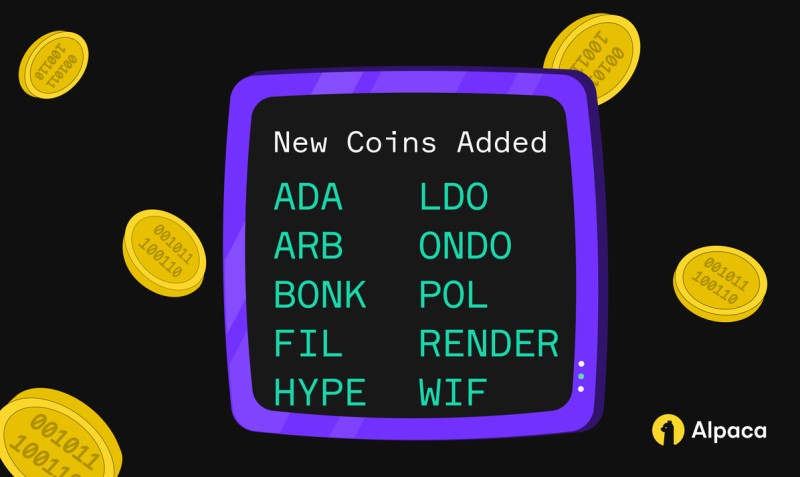
Cryptocurrency prices can experience large and rapid changes. Even established assets with multibillion-dollar market capitalizations remain volatile. Alpaca's disclosure identified several distinct risks: volatile market-price swings, market manipulation, flash crashes, cybersecurity failures, evolving regulation, user responsibility for understanding applicable laws, large immediate and permanent financial loss, lack of FDIC or SIPC protection for cryptocurrency investments, additional risks when using automated or conditional orders, execution delays, partial fills, and price fluctuations outside regular market hours. Possible limits on fractional trading during extended hours were also noted.
The investment guidance repeatedly stated that a person should not invest more than they are willing to lose and should consider their financial circumstances, risk tolerance, and goals before purchasing crypto. This one's important, pay attention: many people get drawn in by stories of huge gains and forget that the same assets can drop just as fast.
Keep a spreadsheet of transactions and cost basis - it is a common practice, and services like ZenLedger can automate tax tracking.



Comments on “Here's a Solid List of Crypto Coins and Tokens Worth Looking Into”
No comments yet. Be the first to share your thoughts.