
- Stop an instamine problem, maybe try MIDAS or Dark Gravity
- Change proof of work and enable or add opcodes
- Set up a mining pool, block explorer, and wallets
- Test on a testnet before live chain changes
How To Make Your Own Cryptocurrency Without Touching A Line Of Code (Because Code Is Scary)
11 October, 2026
0 comments

How Do You Make Your Own Cryptocurrency
So you're wondering how do you make your own cryptocurrency? Good news: the Ethereum Wallet lets you skip the coding bootcamp and just send ether like a regular human who has better things to do. I found this stuff kind of wild when I first read it. You don't need to be some deep tech person to get a token going.
The main word here is how do you make your own cryptocurrency, and the short answer is: you've got a few paths. One is no-code on Ethereum. One is forking Litecoin code. And then you gotta think about where to keep the coins safe so you don't cry later. I'll walk through each part the way the source lays it out.
Building A Cryptocurrency Without Writing Code
Alex Van de Sande, a lead designer on the Ethereum foundation, posted back in December 2015 about building things on Ethereum right away. He said when personal computers came out they were sold as being "for the rest of us" but that crowd was pretty narrow. Today those folks would count as top tier geeks. He really thinks a Candy-crush-playing grandma will use the blockchain one day, just like she uses databases now without knowing it.
What he worked on is bringing it to the next tier: people who can use a spreadsheet but don't like command lines. For that group, basic stuff in minutes on Ethereum includes build your own cryptocurrency, build your own democracy, and make a central bank in the blockchain. That's the no-code dream right there.
The best start is the Ethereum Wallet, a multi platform app that lets you send ether and Ethereum based coins, and make contracts. First thing you do is make an Ethereum account. All you need is a strong password and you get it. To do anything you need a bit of ether, but don't worry, you don't need much. Most contracts cost less than a tenth of a US penny.
If you're just testing, switch to the testnet: go to DEVELOP > NETWORK > TESTNET (MORDEN) then DEVELOP > START MINING. After a few minutes you'll likely have enough ether to test, then turn it off to save your computer. The wallet only mines basic on testnet. For real net mining you need a better tool, like AlethOne from the Turbo Suite. Two buttons: mine on GPU, send rewards to wallet.
Create A Token With Ethereum Wallet
The first contract we make is a token. Tokens on Ethereum can mean any tradable good: coins, points, gold certs, IOUs, game items. Since all tokens use basic shared features, your token works right away with the wallet and other clients using the same standards. That's a big deal for not coding.
Go to the contracts page and click "deploy new contract". Get token code from the source and paste it into the Solidity field. If it compiles with no error, pick "MyToken" from the left dropdown. Set supply 10,000, any name, "%" symbol, 2 decimal places. Scroll down, see the fee estimate, pick how much ether you pay. Any extra ether you don't spend comes back. Press deploy, type password, wait a few seconds.
You'll see your transaction waiting on the front page. Click "Etherbase" (your main account) and in under a minute you own 100% of the shares. To send to friends: select send, pick currency, paste their address, press send. They won't see it yet because the wallet only tracks tokens it knows. Go to Contracts tab, click your new contract, copy address, save it. Then go to contracts page, click "Watch Token", paste address. Name and symbol fill auto. Now you both see the balance.
And now you have your own crypto token! Tokens by themselves can be useful as value exchange on local communities, ways to keep track of worked hours or other loyalty programs.
When people ask how do you create your own cryptocurrency without code, this token path is the clean one. You don't touch a line of code, you just fill boxes and click. It's not a full coin with its own chain, but it's a real token on Ethereum.
Making A Cryptocurrency By Forking Litecoin
Over the 2017 winter break, crypto hit mainstream when Bitcoin passed $10,000. That buzz pushed many to ask how do you make your own cryptocurrency from code. One writer wanted to make a coin to understand the tech from the inside. They used Litecoin v0.15 as the base. Litecoin itself started as a fork of Bitcoin, so most coins share some ancestry.
They made a working coin called faithcoin. It runs on its own chain, with rebranding and its own block explorer. The guide they wrote walks through the Litecoin v0.15 source. They note many old tutorials use outdated Bitcoin or Litecoin and miss key steps. The learnings are shared so you can build your own.
Some users hit errors like "make[1]: *** No rule to make target 'learncoind.1'" because rename misses files in doc/man. You must rename by hand, install all deps, and know a compiler. One user said the guide assumes too much for people who never used a compiler. They said Bitcoin is a bit easier to start, and Linux beats Windows for build. A basic altcoin launch service was offered for 300 us, but that's paid help.
Extra work after a Litecoin fork
If you go the fork route, you're deep in code. It's not the no-code path, but it gives a true coin. Just know the build can fight you. Read good books like Mastering Bitcoin if you want the base.
What Are The Different Kinds Of Cryptocurrency
The source lists many coins, not all meant to be "currencies." Bitcoin, Litecoin, Ethereum, Ripple aim at money transfer. Others have different goals and tech. When folks ask what the different kinds of cryptocurrency are, the split is coins on their own chain vs tokens on a chain like Ethereum. Some are privacy coins like Monero, ZCash, Verge.
Businesses first called their units "coins" after Bitcoin. But the SEC crackdown on unregistered securities made many switch to "tokens." To avoid that, some made NFTs, where each token is different. So a "coin" vs "token" vs "NFT" is a real split you should know before you build.
Getting Your First Coins
Coinbase is the popular exchange for new folks. You can sign up and buy Bitcoin, Ethereum, Litecoin, or Bitcoin Cash with a card or bank transfer. You don't buy a whole coin. You can own 0.00000001 BTC, called a Satoshi. So $20 gets you in.
If you want daily pay, Ethereum or Litecoin have lower fees and fast speed than Bitcoin. If you want privacy, look at Monero, ZCash, Verge, but you need another exchange like Binance. If you want a store of value, Bitcoin has been the center. When it rises others rise, when it drops others drop. That's just how it goes.
I gotta say, new cryptocurrency projects show up all the time and some folks hunt for the next big thing. The source mentions presale cryptocurrency and get free cryptocurrency as ideas in the space, though you should be careful with both. Free coins often come with strings or scams.
Secure Your Coins
Rule #1 of crypto: don't leave your coins on an exchange. Coinbase is a web app, so they hold your private keys. If they get hacked, your coins are gone. Exchanges have been hacked before, like Mt. Gox, Blackwallet, Bitthumb, Coincheck. This part is important, pay attention.
You can store coins where you hold the keys. Options: software on your computer, hardware wallet, or paper wallet. Each has ups and downs. The key is your keys, not on a third party.
Ways to store your crypto
- Software wallet on a computer you control, like Bitcoin Core
- Hardware wallet such as Ledger or Trezor
- Paper wallet with private key as QR on paper
- Separate clean computer just for wallet sync and sends
Bitcoin Core is a full node, downloads the whole chain, over 145 GB. It keeps keys on your machine, but that machine can still be hacked. Use a separate computer, encrypt the wallet, backup the file on an external drive offline. For other coins you need their own node software.
Hardware wallets keep keys on the device, never on your disk. Ledger and Trezor make them. They give a 24-word seed to recover if lost. Buy direct from the vendor, not eBay, to avoid supply-chain attacks. Paper wallets print your key as QR. Make them on a Linux USB boot, offline, to cut malware risk.
Blockchain Explained Simply
In 2008, someone using Satoshi Nakamoto posted the Bitcoin whitepaper. That introduced blockchain, a way to move value peer to peer with no central authority. The blockchain explained simply is: it bolts together cyber security, encryption, and cryptography to move value without big banks.
Think of sending a photo. You send a copy, original stays. A copy is fine for a photo, not for $1,000. Banks used to be the fix. Blockchain lets you send value with no double spend. You and the network see where the value sits, no trusted middle man.
What you're sending are the ones and zeros that make up that file. Now, a copy is perfectly fine for a PowerPoint or photo. But it's not very good if you're sending someone $1,000 -because a copy of that $1,000 could be spent again.
Each blockchain has three parts: the software (protocol), the parties (network), and the transferable unit (tokens). Mining Bitcoin means processing the next set of transactions to add to the chain. Hard math links blocks so change is near impossible. That's proof of work. Ethereum uses proof of stake, a different method.
Non-Fungible Tokens And Collectibles
NFTs boomed as a way to sell art and tweets on a blockchain. In March 2021, Jack Dorsey sold his first tweet as an NFT for $2.9 million. The sale used a hash function to make a unique string for the file. Change one bit, hash changes completely. That proves original from copy.
The blockchain is blocks chained by hashes, so history is permanent. Public chains let anyone check a transaction. Valuables by Cent set up a site to auction tweets, paid in Ether. Only one NFT of the first tweet exists, so it's hard to call it a security, though that's still unclear.
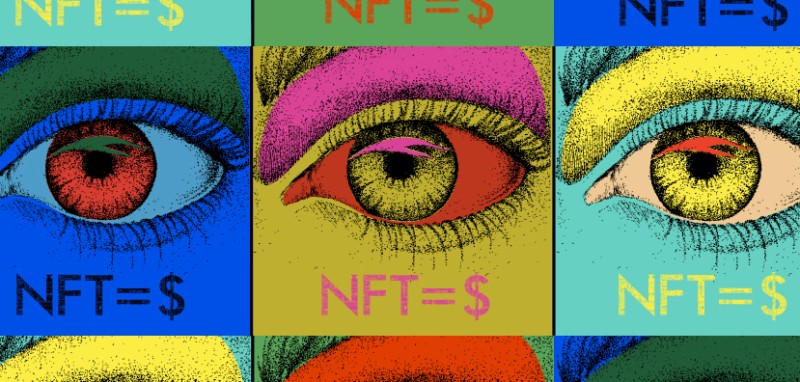
Value of NFTs is shaky. First items can be worth more, like first art. But the number of NFTs for sale exploded, with low barriers to entry. Some think the big prices were ads to get eyeballs. Don't assume an NFT keeps its paid price.
Designing A Logo For Your Cryptocurrency
If you make a token, you need a logo to brand it. A linear color scheme works best. Bitcoin uses yellow and white, easy to recall. Text helps: Bitcoin has a big "B" in a circle. Pick a user-friendly shape and maybe a short quote under it.
The source says crypto is hard to copy, gives anonymity choices, no interest rates, and fast transfer. A logo makes it real to users. You don't need a generator, better to hire a pro or make it clean yourself.
Crypto Up And Coming And Risk
The space moves fast. Some call it crypto up and coming when new chains launch, but risk is real. Crypto assets show extreme price swings and no government backup. Exchanges can fail or get hacked. Transactions are final, so a wrong address means lost coins.
New crypto projects with huge potential get hyped, but many fail or get hacked. The source notes new crypto projects with huge potential draw money, then crash. Potential crypto to explode is a common search, yet most don't. Always research before you buy or build.
What is the fastest growing cryptocurrency is a question with no fixed answer, since rankings shift. The source lists advisors uneasy about digital assets, showing the need for real education. If you can't find details on a firm's founders, that's a red flag. Use listed, regulated entities where you can.
Risks to weigh before you build or buy
- Extreme price volatility and no government insurance
- Exchange hacks and shutdowns can block access
- Irreversible sends to wrong addresses
- Regulation still developing across countries
Exchanges have been hacked before and will again… Look at Mt. Gox, Blackwallet, Bitthumb, Coincheck, etc….
Final Notes On Building Your Own
So how do you make your own cryptocurrency really comes down to: no-code token on Ethereum, or fork Litecoin for a chain. Each has a place. The token is fast and easy. The fork is real but tough to build and keep safe from instamine.
I like that the no-code path opens this to normal people. But don't skip the part about where you keep coins. A token in a watched wallet is fine, a forked coin needs nodes, pools, explorers. Plan the storage before you launch, not after.
The source also shows get free cryptocurrency and presale cryptocurrency as parts of the wider space, though both carry risk and often link to scams or unclear teams. If you build, focus on clear use and safe keys. That's the whole game.



Comments on “How To Make Your Own Cryptocurrency Without Touching A Line Of Code (Because Code Is Scary)”
No comments yet. Be the first to share your thoughts.