
- Fiat-pegged: tied 1:1 to dollars or euros, examples USDT and USDC
- Commodity-pegged: tied to gold or silver, example PAX Gold
- Crypto-backed: backed by other coins, often overcollateralized, example DAI
- U.S. Treasury-backed: supported by treasuries, example USDY
- Algorithmic: held by code not collateral, example FRAX, risky after TerraUSD fall
What Us Crypto Currency Actually Is: A Plain English Walk Through The Basics
23 September, 2026
0 comments
What Us Crypto Currency Actually Is
I sat down with cold toast and tried to make sense of what us crypto currency means for regular folks. The short version is that it's digital money on a blockchain, unregulated and swapped peer-to-peer. You don't need a bank to move it from one person to another. And that part feels kind of wild when you first hear it.
Some people call it the latest big step in how humans trade stuff. Others just see a messy new thing with real risks. I'm just a guy trying to figure out what exactly is cryptocurrency and how does it work without falling down a rabbit hole. The basics are simpler than the hype makes them sound.

A tech talk at The Tech Academy had Derek Meyer walk through crypto currency and blockchain, then take questions. That public interest tells me a lot of us want plain talk, not jargon. I took a look so you don't have to, and wrote it down the way I'd tell a friend.
Cryptoassets And Cryptocurrencies
Cryptoassets are digital representations of value or rights that use blockchain technology. They are unregulated, peer-to-peer exchanges of value that rely on encrypted digital data. Cryptocurrency is a kind of cryptoasset you can use as money or as a bet on price moves.
There isn't one clean answer to "who regulates crypto" because it depends on how the crypto is set up, designed, and used. Normal forex trading looks at exchange rates and big economic stuff. Crypto asset markets are newer and a lot more wobbly. That matters when you're thinking about real money.
Cryptoassets are digital representations of value or rights that use blockchain technology.
Blockchain Explained Simply
Blockchain is a shared unchangeable record that tracks the exchange of assets. Info is updated fast and can't be easily faked because many people hold the same copy. No single org or person holds the key to it.
Proponents say it's secure. What is clear is that the crypto it moves can swing hard in value. blockchain explained simply means a public list of who sent what to who, copied all over, not stored in one safe. That's the core idea behind most of this stuff.
how does blockchain technology work in practice is: someone sends coins, the network checks it, and the record is added. If you want to buy blockchain coins, you're really buying a slice of that record system. It's not a thing you can hold, it's data people agree is worth something.
Bitcoin And Regular Money
Bitcoin and other cryptocurrencies share some traits with regular money. Economists Berentsen and Schär said bitcoin has no intrinsic value. State money like the U.S. dollar has no intrinsic value either. Both are just trusted as worth something.
Bitcoin has a limited supply. No central bank prints it. The code schedules new coins until the total hits 21 million. Cash in your wallet is cotton and linen blend. Digital coins are just data. Neither is "real" in a pile-of-gold way.
No middle man is the big one. Satoshi Nakamoto's paper described electronic cash sent directly from one party to another without a financial institution. That's the peer-to-peer part people talk about. You stay anonymous, no credit link formed.
A purely peer-to-peer version of electronic cash would allow online payments to be sent directly from one party to another without going through a financial institution.
Stablecoins
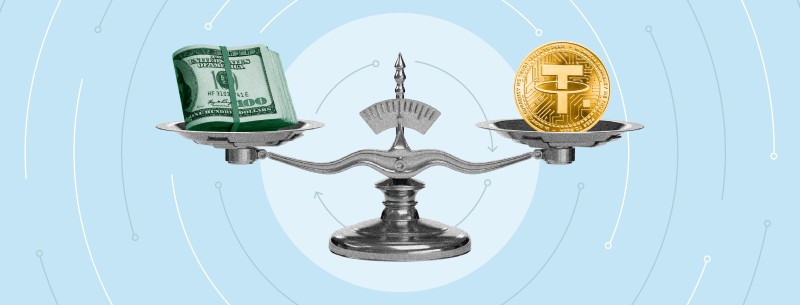
Stablecoins have become a quiet giant in the crypto market. They are pegged 1:1 to less volatile assets like fiat money or gold to keep value steady. Most crypto jumps around, but stablecoins try to stay put.
They are programmable digital currencies, often tied to the USD. Most run on networks like Ethereum and Tron. Bitcoin launched in 2009 and showed decentralized peer-to-peer payments, but its price swings made it hard to use in shops. Stablecoins showed up in 2014 to fix that shake.
Types of stablecoins
Regions with shaky money use stablecoins as a hedge. Cross-border send volume grew fast in Latin America and Africa. The EU has MiCA rules for stablecoins. Singapore and Hong Kong built frames too. The U.S. passed the GENIUS Act for dollar-backed stablecoins.
Major issuers are Tether (USDT) and Circle (USDC). PayPal joined with PYUSD. Use cases include DeFi, cheap payments, and remittances. Sending $200 from Sub-Saharan Africa by stablecoin was about 60% cheaper than old-school remittance per World Bank data.
Stablecoins are programmable digital currencies, most commonly pegged 1:1 to fiat currencies like the USD.
Crypto Debit Cards
Crypto-funded debit cards are a bridge between crypto and normal finance. A crypto debit card links a payment firm to your wallet and auto-converts crypto to fiat at checkout. The shop gets dollars, you spend coins.
Shops often won't take Bitcoin directly due to legal blur and price swings. Example: John uses a Bitcoin card at a coffee shop. The processor pulls the crypto, converts to dollars, sends to the shop in seconds. That's the whole trick.

If you want to how to pay in crypto , a card is the easy path right now. To shop with crypto online you can use the same card at any site that takes debit. Just know the IRS sees crypto as property, so spending can trigger taxes if price rose.
Four things to check with crypto cards
- Service in your area: some places ban or block crypto use
- Tax: spending may mean capital gains if value went up
- Supported coins: most cards take a few popular tokens
- Fees: no deposit fee usually, but withdrawal and fx fees hit
Pros are spending crypto like cash and some cash-back. Cons are tax events, geo blocks, and you need wallet balance. A few cards skip ID via crypto credit card no kyc models, but those can be limited or risky depending on where you live.
Charities And Cryptoassets
Some charities look at cryptoassets to move money where banks fail. The UK Charity Commission says real risks exist and much is unknown. Few charities use crypto, and those that do often convert fast to normal money.
Trustees should think hard before holding or trading crypto. Donor identity is tough on blockchain due to anonymity. Big value drops show why caution matters. If a charity engages, it should write down the why and show it met duties.
Trustees should think carefully before investing, evaluating benefits and risks, taking professional advice.
What Us Crypto Currency Based On
what is crypto currency based on is mostly blockchain records and code rules. Coins get value from what people will pay, not from a government promise. Stablecoins add a link to outside assets to calm the price.
Eight coins already meet the ISO 20022 standard: XRP, Stellar, XDC, Algorand, Iota, Hedera, Quant, and Cardano. That's a technical stamp, not a safety badge. I'd still watch the volatility before calling any of them "safe."
Different Kinds Of Cryptocurrency
what are the different kinds of cryptocurrency starts with bitcoin as a commodity, per most courts. Then altcoins, stablecoins, and tokens for apps. Some are securities by how they're sold, says the SEC via the Howey test.
Most cryptocurrencies were found to be securities by courts. Bitcoin is broadly seen as a commodity not made by a corporation. Crypto firms often want CFTC oversight instead of SEC, since CFTC asks less disclosure. That fight shapes the rules.
Coins, blockchain, payments categories
- Coins: bitcoin, stablecoins, ISO coins like XRP
- Blockchain: shared record tech under all crypto
- Payments: cards, remittances, peer-to-peer sends
US Policy And Regulation
The U.S. moved to set crypto rules via exec orders and bills. One order set a working group on digital asset markets. Another set a Bitcoin reserve from forfeited coins. A report pushed dollar-backed stablecoins and opposed a U.S. CBDC.
Congress pushed a three-part plan: GENIUS Act for stablecoins, CLARITY Act for market structure, and a CBDC bill. The GENIUS Act was signed. CLARITY passed the House. The CBDC bill passed the House too. Senate still reviews some.
An order on fair banking aimed to end "debanking" of crypto firms. Critics say weak rules could pull money from protected markets into risky ones. Only 17% of Americans ever used crypto, but it creeps into 401ks.
Market Structure And SEC CFTC Split
Market structure is how firms get classified for regulation. SEC handles securities, CFTC handles commodities. The Howey case said an orange grove sale with profit share was a security. CFTC covers future delivery of nearly anything except onions.
Most courts found most cryptocurrencies were securities. Bipartisan agreement says Bitcoin is a commodity. Crypto lobby likes CFTC under a friendly majority. SEC rules bring disclosure dating to New Deal reforms after the Great Depression.
Most courts found most cryptocurrencies were securities; bipartisan agreement Bitcoin is commodity.
Risks And Illicit Use
Crypto on blockchain is volatile and can crash sudden. Holders face trouble if coins are stolen or misused. Cartel affiliates in the U.S. collected cash and converted to crypto, per partial notes. Stablecoins got used for sanctions evasion by some regions.
Less than 1% of on-chain transactions are illicit. Centralized issuers can freeze tokens; decentralized ones resist. Some warn weak regulation could rip a hole in finance like pre-Depression days. The Charity Commission says err on caution.
Crypto Most Potential
If you ask cryptocurrency most potential , stablecoins lead for payments and remittances. They cut cost and settle fast. Emerging markets use them as inflation hedge. DeFi builds on them for loans and yield.
Bitcoin stays the name people know, but its fixed supply and swings limit daily use. ISO coins may fit bank pipes later. I'm not betting my rent on any, just noting where the real-world use shows up most.
Global Adoption Trends
Adoption varies by region. Some places ban crypto (reports cite Turkey, China, India). The U.S. mulls a national digital currency. Emerging markets like stablecoins vs inflation. Cross-border remittances are cheaper with them.
Crypto debit cards work where cards are accepted, not in crypto-hostile spots. Latin America and Sub-Saharan Africa show strong transfer growth. Eastern Asia and Europe grew too, but slower. HK and Singapore built sandboxes and frames.
Regions like Latin America and Sub-Saharan Africa embrace stablecoins as hedge against monetary instability.
Plain English Wrap On What Us Crypto Currency
What us crypto currency boils down to is digital money on a blockchain, unregulated and peer-to-peer, with stablecoins and cards around. Charities peek in, regs lag, and risks are real. I wrote this so you can get the shape without the spin.
Hey, don't skip the volatility part. Coins can drop fast and there's no bank to call. If you ever use crypto to pay or send, know the tax and geo rules first. That's the boring bit that saves people pain.




Comments on “What Us Crypto Currency Actually Is: A Plain English Walk Through The Basics”
No comments yet. Be the first to share your thoughts.