
How to Make Money on Crypto: Staking, Mining, and the Risks You Should Know

How to Make Money on Crypto Without the Hype or Shortcuts
I've been watching the crypto space for years, and one question keeps coming up: how do you actually turn this stuff into money you can spend? The source material I'm working from lays it out straight - there are two main paths that reliably produce cash in a bank account, and a bunch of other methods that mostly just give you more tokens. Let's walk through what works, what doesn't, and where the real risks hide.
The main word here is how to make money on crypto - not how to collect more magic internet points. Tokens aren't rent money until you convert them. That conversion step is where most people get stuck or burned.

Two Real Paths to Cash
The material emphasizes two primary routes for people who want actual currency rather than more tokens. First, keep your holdings and borrow against a portion. Second, hold until the value goes up and sell a slice to raise cash. Everything else - staking, yield farming, liquidity provision, options income - can grow your stack but doesn't reliably put dollars in your account without extra steps.
Bitcoin gets called out specifically. It has a compelling long-run growth story but produces no income just by sitting there. It's also volatile. Borrowing against part of a Bitcoin position can add cash flow while keeping exposure. Alternatively, you hold through appreciation and periodically sell a portion. The first route brings debt, collateral management, interest expense, and monitoring. The second creates a taxable sale and reduces what stays exposed to future gains.
Staking, liquid staking tokens, yield farming, liquidity provision, and options income can all increase a crypto stack, but they do not reliably produce cash in a bank account without additional steps.
Selling After Appreciation - The Simpler Route
Selling a fraction of a position after it appreciates is described as the simplest way to turn holdings into cash without adding leverage. You let the position grow, set sale rules in advance, and convert a portion to fiat when a price target or schedule hits. The proceeds can fund investments, diversify a balance sheet, reduce concentration, or meet a personal goal.
This approach has no margin calls, collateral top-ups, cure windows, or custody transfers. It locks in part of an increase while leaving the rest exposed to future gains. It can also move capital from crypto into income-producing assets like property, equities, or a business.
Written Sale Rules and Tranching
Execution starts with rules set before a market target is reached. Sell bands can use specific price levels, a fixed schedule, or both. Investors may also divide one larger sale into several smaller sales - a process called tranching. The example provided begins with a 50% gain. The investor might sell 10% of the position at that point, another 5% if the price rises by an additional 10%, and a final 5% if it rises further. Tranching reduces the chance of selling too early, reduces regret if the rally continues, and produces cash along the way.
Limit orders can control slippage and avoid executing during illiquid periods. Accurate cost-basis records should identify the lots and quantities actually sold so tax reporting reflects the transactions.
Tranching illustration from the source
- Starting position: $300,000
- Appreciation: 50%, increasing the position to $450,000
- Amount sold: 20% of the position
- Gross cash received: $90,000
- Capital gains taxes and fees: deducted to determine net deployable amount
- Remaining exposure: 80% of the original position
Trade-offs exist. A realized gain creates a tax event. If price keeps rising after the sale, you may regret selling too much. A sale also reduces the amount that can participate in later appreciation. The offsetting benefits are simplicity and no collateral risk. This fits an investor who wants liquidity without leverage, can follow written rules, and wants to rebalance concentrated crypto into property, equities, or a business where cash flow is the priority.
Borrowing Against a Crypto Position
Borrowing against a portion of holdings can convert a non-yielding position into price exposure plus income-producing assets. The core crypto stays in place while loan proceeds acquire an asset that generates cash flow. This diversifies a balance sheet without liquidating the original exposure.
A cash-flowing asset can provide returns not perfectly correlated with crypto. Borrowing turns unrealized appreciation into usable cash while deferring a sale. It preserves participation in future crypto appreciation and creates optionality - cash flow can service debt, buy price declines, or fund other opportunities. Borrowed funds can also support day-to-day needs and help build credit history.
Borrowing against a portion of crypto holdings can convert a non-yielding position into a combination of price exposure and income-producing assets.
Ways crypto-backed borrowing can be used
- Use a crypto-backed mortgage to acquire an investment property
- Use a property's rent to create what some call bitcoin-yield
- Pledge the cryptocurrency as collateral or have it recognized as reserves supporting the financing
- Direct proceeds into a business that produces measurable cash flow
- Invest in equities with dividends
- Use income funds with defined risk controls
- Retain the original crypto exposure instead of selling it to finance the new asset
The loan should be sized conservatively. Cash flow from the acquired asset should cover interest with room remaining rather than merely reaching the interest bill. A liquidity reserve should be maintained for repairs, vacancies, unexpected expenses, or collateral calls.
Centralized vs Decentralized Lending Platforms
Centralized lenders offer custody, disclosures, service, and cure windows. The trade-off is giving up unilateral control of pledged assets in exchange for institutional safeguards and more clearly defined operations. Decentralized protocols enforce rules through smart contracts with public parameters and on-chain execution. This provides transparency and 24/7 access, but the participant assumes monitoring duties, governance risk, and smart-contract or code risk. Platform choice depends on custody preference, operating style, and how actively the borrower wants to manage the position.

Risk Controls for Crypto-Backed Borrowing
The source lists specific risk controls that feel like a checklist any serious borrower should run through:
Risk controls from the material
- Match the duration of the asset with the duration of the liability - long-term assets should not be financed with short-fuse loans
- Keep the loan-to-value ratio conservative
- Pre-fund the liquidity needed for collateral top-ups
- Model a severe but reasonable drawdown in the collateral
- Model an interest-rate increase
- Confirm that cash flow still covers debt service under both stressed scenarios
- Keep a reserve for repairs, vacancies, collateral calls, and other unexpected needs
- Document the transaction
- Expect wallet proofs and ownership links if the cryptocurrency is counted as reserves
- Track the tax treatment of interest expense according to use of proceeds and jurisdiction
- Price the complete package including interest, closing costs, custody or servicing fees, taxes, and the borrower's time
- Establish action thresholds in advance and review them on a schedule
Borrowing suits a holder with a defined project and measurable yield, reliable cash flow that can cover interest with a margin, willingness to monitor collateral, and preference for retaining long-term exposure. It's less suitable when income is unstable, the borrower can't monitor the position, or the structure only works at high leverage.
Staking and Other Reward-Based Methods
Staking, liquid staking, yield farming, liquidity provision, and options income are identified as methods that can add more tokens to a holding. These activities may increase a crypto stack, but the reward may stay denominated in tokens rather than fiat. Converting the reward can require another sale, borrowing, or a payout arrangement. The material doesn't provide current reward rates, lockup periods, fee schedules, or protocol-specific calculations. It distinguishes these token-generating strategies from the two more direct cash routes of selling appreciated holdings or borrowing against them.
If you're wondering what is staking ada or similar questions about specific protocols, the short answer is: it's a way to earn more tokens, not necessarily cash. The conversion step remains.
Mining - Still a Thing But Different Now
Mining uses computing power to solve difficult computational problems in exchange for newly issued coins. A simplified explanation calls it completing a very hard puzzle on a computer. Mining requires specialized hardware and software. A person interested in mining must invest time and money in a mining rig, and not everyone will be able to operate one. The source presents mining as a possible source of relatively steady income, while also placing it within the broader requirement to research the method and understand its risks before spending money.
The broader earning-method material also includes lending through exchanges, day trading, ICOs, and crypto price appreciation. These are separate from mining because they use trading proceeds, borrowed funds, project returns, or asset sales rather than mining rewards. If you're researching what is bit mining or looking at crypto coins to mine or even crypto miner farm setups, understand the upfront capital and ongoing electricity costs before you start.
Learning-and-Earn, Affiliate, and Platform Programs
Additional programs listed as possible ways to earn or obtain crypto include learning rewards, affiliate relationships, referral arrangements, and platform-specific promotions. Learning-and-earn programs provide crypto for completing educational tasks. A 2026 listing advertises 10 such programs and describes them as allowing participants to earn free crypto by learning about cryptocurrency. Another 2026 listing covers 15 methods for obtaining free crypto but warns that not every option is reputable.
Affiliate programs pay for recommending companies or products. A listing advertises 20 crypto affiliate programs and describes a crypto affiliate program as a way to earn money by recommending companies the user already uses. A separate description associates referral and affiliate programs on major exchanges with passive income for content creators. The source does not provide payment rates, program terms, or eligibility requirements. Other published crypto-income listings identify categories of opportunities but don't establish that any particular program is reputable, profitable, or currently available.
For someone asking how can i earn cryptocurrency without putting capital at risk, these programs exist but the amounts are typically small and the time investment real.
Crypto as a Payment Rail for Creators and Freelancers
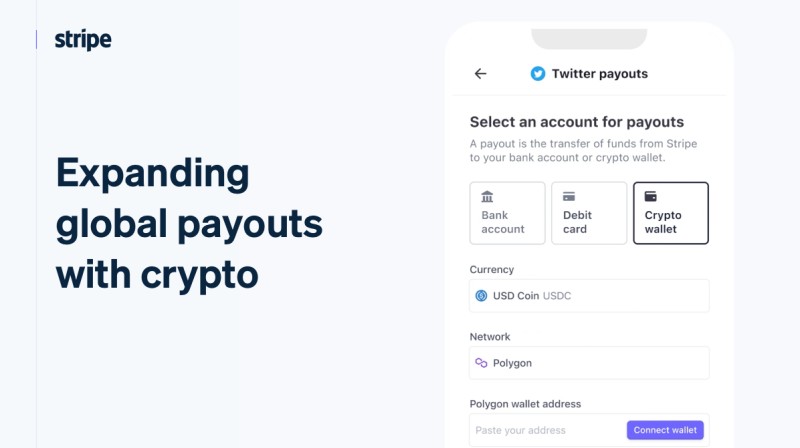
Crypto can also function as a payment rail for work. Creators, freelancers, sellers, and solopreneurs can receive payouts without converting every payment through a traditional banking system. Stripe built Stripe Connect to help businesses send payouts programmatically. At the time of the announcement, businesses used Connect to send payouts in local currencies to more than 70 countries. Stripe presented cryptocurrency as a possible open-access global financial rail, rather than focusing only on crypto's role as a store of value.
Twitter was the first partner in the announced pilot. Under the crypto-payout arrangement, creators who opted in could have earnings sent to a cryptocurrency wallet. Twitter selected the payout option, while Stripe handled the crypto-related acquisition, custody, transfer, and operational requirements. Platforms didn't need to change their code or take on the process of acquiring, storing, and transferring crypto themselves. USDC, a stablecoin pegged to the U.S. dollar, was to be supported initially. The stated purpose was to allow people who could not hold dollars to receive dollar-linked payouts. Stripe selected the Polygon network because of its low fees, speed, Ethereum integration, and broad wallet compatibility. Compatible wallets included MetaMask, Coinbase Wallet, and Rainbow.
Twitter is where people go to have conversations about what's happening. We're focused on helping creators who drive those conversations earn money and connect with their audiences in new ways.
Creators could hold their balance on Polygon, bridge to Ethereum, and exchange for another currency. Stripe planned to add support for additional blockchain rails and payout currencies over time. Creators and freelancers who selected crypto payouts went through Stripe's normal onboarding flow with comprehensive know-your-customer checks. Users could manage account details, see earnings in real time, and view upcoming payouts through the Stripe Express app. Stripe announced a plan to support crypto payouts in more than 120 countries by the end of 2022 - that figure was a stated plan at the time of the April 2022 announcement.
Crypto Donations as a Nonprofit Funding Source
Approximately 65 million Americans were described as owning cryptocurrency, with the global crypto market capitalization increasing by $1 trillion since 2021. Despite that adoption, relatively few nonprofits accept crypto donations. The opportunity extends beyond occasional asset gifts to reaching high-capacity, tax-aware, and long-term-giving donors.
In the U.S. context discussed, crypto donations are described as tax-deductible charitable contributions. Donors can deduct the full value of the gifted crypto at the time of donation and avoid the capital gains tax that could otherwise arise from selling appreciated crypto. The source recommends that a nonprofit convert donated crypto to cash immediately so the gift's value isn't exposed to later market volatility.

Growth in crypto philanthropy per the 2025 State of Nonprofit Asset Gifts Report
- 12% of Forbes' Top 100 U.S. charities accepted crypto donations in 2020
- 56% accepted them during 2024
- 70% accepted them by the end of 2024
- In 2024, nonprofits reportedly received more than $1 billion in crypto donations with an average gift above $10,000
Three factors drive growth: new-money donors who experienced substantial appreciation, tax benefits (deduction plus avoided capital gains), and streamlined technology where platforms accept assets and convert to cash without requiring the nonprofit to manage every part. Concerns about accepting crypto include market volatility, longevity questions, data privacy preferences, and environmental impact criticism - though projects have been improving efficiency, specifically pointing to Bitcoin's Lightning Network and the Ethereum 2.0 merge.
Benefits for nonprofits include potential for larger donations (average crypto gift ~$10,000 vs average online cash donation ~$120), access to younger and high-income donors (millennials and Gen Z make up much of the crypto user base), and adaptation of fundraising to support a newer donor group and diversify funding channels.
DeFi Lending Hacks and Mass Withdrawals - The Risks Are Real
On April 18, 2026, hackers stole an estimated $290 million from major decentralized finance lending platforms. Lenders were exposed to potential losses, and the largest DeFi lending platform, Aave, experienced withdrawals severe enough that some lenders, including stablecoin lenders, could not retrieve their funds. The Bank Policy Institute identifies three inherent risks: DeFi platforms rely on third parties for collateral verification, insurance funds may be too small to compensate all affected lenders, and mixers can obscure wallet-holder identities and make it harder to detect criminal activity.
The KelpDAO exploit illustrates how this works. KelpDAO is a restaking protocol where users deposit ETH and receive rsETH receipt tokens. Hackers exploited a vulnerability to create rsETH tokens without providing the corresponding ETH, then pledged the fabricated rsETH as collateral on DeFi lending platforms and borrowed legitimate ETH against it. KelpDAO froze relevant markets after discovering the exploit. Lending platforms classified the rsETH collateral as worthless. Lenders who supplied ETH received worthless rsETH, while attackers retained the borrowed Ethereum. The stolen ETH moved to Tornado Cash, a mixer, to obscure the trail.
The result was compared to depositors being unable to withdraw account balances during a bank run.
How the hack triggered an Aave run: Aave normally compensates lenders for some counterparty losses through an insurance fund valued at approximately $80 million to $100 million, while potential exposure was almost $200 million. Aave lenders can withdraw only when tokens are idle in the relevant liquidity pool. As lenders attempted to retrieve their ETH, available liquidity disappeared. Only ETH lenders were directly exposed to the KelpDAO loss, but lenders of other crypto assets also began withdrawing from fear. Stablecoin lenders withdrew $5 billion from Aave soon after the hack was announced. The combination of higher demand and lower available supply caused stablecoin interest rates on DeFi platforms to rise to approximately 10%.
This isn't the first time. In October 2021, a hacker drained $130 million from Cream Finance and stablecoin interest rates rose to nearly 12%. In July 2023, a hack at Curve Finance caused the Curve token's value to collapse, and because a large quantity of Curve tokens had been posted as collateral on Aave, lenders withdrew in fear of undercollateralized losses. The pattern repeats.
What the KelpDAO exploit exposed about DeFi lending
- Collateral verification depends on third parties - poorly verified data can cause loans against overstated or worthless collateral
- Insurance funds may be inadequate for systemic events
- Mixers obscure transaction trails and make recovery harder
- Bridge validation systems with single verifiers create single points of failure
- Liquidity can evaporate faster than liquidation mechanisms can respond
Aave's insurance fund was expected to be exhausted after the broader hack. The amount left to cover losses was estimated at $100 million to $120 million. A proposal on Aave's public governance site described a process where lenders who lost funds would divide remaining losses equally. Other approaches included having Aave pay from its treasury or raising additional debt or equity. The identity of the party that would ultimately bear the loss remained unresolved in the material.
Price Appreciation, Day Trading, and Project Investments
Crypto can be acquired in anticipation of price increase. An investor may buy and hold, buy and sell over time, or trade different cryptocurrencies. Price appreciation only produces a gain when the asset can be sold at a favorable price or when the gain can be used through borrowing. Day trading involves buying and selling within a single day to respond to price movements - described as popular but quite risky, producing losses as well as gains, with the stated requirement that the trader understand the market and conduct research before starting.
Investing in crypto projects or initial coin offerings is another route. An ICO is a crowdfunding-style mechanism where developers issue tokens that investors can buy in anticipation of potential profits. ICO investment is identified as high risk because an offering may not succeed. Preparation includes researching the project and weighing advantages and disadvantages. The material repeatedly emphasizes learning how different cryptocurrencies function, how to buy and sell them, how wallets and exchanges work, and how assets should be stored before committing money. It presents crypto as a way to earn online from home but does not treat the outcome as risk-free.
If you're exploring what is crypto currency investment or investment in cryptocurrency or even cryptocurrency and investment strategies, the baseline is the same: understand what you're buying, how it works, and what can go wrong. Some investors also look at cryptocurrency and stocks correlations for diversification, but the source doesn't go deep there.
How Cryptocurrency Works - The Basics
Cryptocurrency is a digital currency or asset that uses cryptography to secure transactions. It's not backed by a government or central bank and is described as decentralized, allowing use across national borders. Crypto can be used to make purchases, store value, send payments, trade, or earn money online. The word "crypto" comes from the Greek word kryptos, meaning "hidden" or "secret." Cryptography uses mathematical algorithms and protocols to protect transactions and create a secure network.
Currency is generally a form of money used as a medium of exchange, including physical coins, bills, and electronic forms like PayPal balances and credit cards. Crypto uses digital tokens and assets recorded on an online blockchain ledger. Each transaction is added to the blockchain, presented as making the record more secure and traceable than some traditional payment methods. A beginner-oriented explanation says crypto can send payments anywhere in the world within minutes, with no fees or restrictions - though more specific material gives narrower fee descriptions. Stripe selected Polygon for its low fees, while some nonprofit crypto tools charge approximately 0.5% to cover network and conversion costs. The fee claims are not uniform across the material.
Basic participation begins with learning how crypto markets and individual assets work. Blogs, articles, and video tutorials are listed as educational resources. A crypto wallet is needed to hold coins and tokens - obtainable online or through mobile applications, functioning similarly to digital bank accounts. Crypto can be bought on an exchange or transferred from another wallet. Once a wallet is established, a person can buy, sell, or hold crypto, use it to purchase goods or services from accepting retailers, and participate in financial markets. Some exchanges also offer lending services where coins are borrowed against collateral. Crypto may also be used to store wealth, alongside a warning to understand the market and its risks before participating.
What This All Means for You
The social and institutional role of crypto continues to change. One account describes its transformation from a cypherpunk experiment into a Wall Street favorite as bleak, while arguing the outcome wasn't predetermined. It asks where the left went wrong and how it might reassert itself in shaping crypto's future. That's a bigger question than this article covers, but it's worth keeping in mind - the infrastructure you're using today was built by people with specific ideologies, and those ideologies shape what's possible and what's risky.
If you're serious about how to make money in cryptocurrency , the honest answer from this material is: there are two reliable paths to actual cash, both have real trade-offs, and everything else mostly just gives you more tokens that you still have to convert. Staking and mining can produce income but come with hardware costs, lockups, technical complexity, and the same conversion problem. Affiliate and learn-to-earn programs exist but pay small amounts. Crypto payouts work for creators in certain jurisdictions. Nonprofits can tap a donor base with high average gift sizes. And DeFi lending? The yields look attractive until a hack drains the pool and you can't withdraw.
Do the math. Check the risks. Don't put in money you can't afford to lose - and definitely don't borrow against crypto you need to keep, unless you've stress-tested the position the way the risk controls section describes. The people who make money in this space long-term are the ones who treat it like any other financial decision: with a plan, exit rules, and a clear head.


Comments on “How to Make Money on Crypto: Staking, Mining, and the Risks You Should Know”
No comments yet. Be the first to share your thoughts.