
- Setup: Does it run from a simple desktop app or need command-line work?
- Hardware: Does it support the CPU or GPU you have, or the card you plan to rent?
- Coin: What work does it perform, and which rewards or emissions can it earn?
- Payouts: Does payment pass through a wallet, pool, marketplace, or exchange?
- Cost: How much comes from power, hardware, cloud rental, and weak market liquidity?
- Control: Are admin ports, wallets, and update settings protected from other people?
Which Cryptocurrency Miner Is Best? Tools, Profit, and Risks
1 October, 2026
0 comments
Which Cryptocurrency Miner Is Best? Tools, Profit, and Risks
There is no single best cryptocurrency miner that wins every setup. A tool can be easy to install and still be a bad fit if it mines the wrong coin, draws more power than it earns, or points at services you do not control. I would judge the exact hardware, coin, payout path, and security settings before I cared about a big hash-rate number. The best cryptocurrency miner is the one you understand, can measure, and can stop.
A fair cryptocurrency miner comparison
A one-click app may be easier than a command-line miner, but easy setup can hide who controls the service. The best cryptocurrency miner for one person may be a poor choice for another. That is why I would test cost and control before chasing a higher number.
What Crypto Mining Actually Does
At a basic level, how crypto mining works is simple. A crypto mining machine spends electricity and chip work to produce mining work. In return, it may earn coin rewards or sell that work to a marketplace.
That is what a crypto mine is in practice. It is not a mine full of pickaxes. It is a computer or a group of computers tied to one coin, one reward system, and one payout path.
For proof-of-work coins such as Bitcoin, Bitcoin mining means doing hash work and receiving rewards for it. Pearl used a different model. Its proof-of-useful-work system used matrix math like the work done in some AI jobs, though most of the mining work described in the source had no buyer and its output was thrown away.
Questions about coins you can mine often miss the larger point. The coin matters, but so do the hardware, network rules, market demand, power cost, and the service holding your wallet or payout account.
Desktop GPU Mining with AlethOne
In a December 3, 2015 Ethereum Foundation post, lead designer Alex Van de Sande described Ethereum tools for people who could use office applications but did not want to work with command lines. That gives us a clear picture of an early desktop mining setup. The tools put wallet functions and GPU mining behind a simple interface.

The wallet offered basic mining on the Morden testnet. A user could open the network menu, choose the testnet, and press the mining control. Test mining could produce test ether within minutes, after which the user could stop it and save computer resources.
Live-network mining used a separate tool called AlethOne. It had two main controls: one button to start GPU mining and another to deposit rewards into a wallet. The post showed that simple model, but it was a historical Ethereum example. It does not prove that the wallet, network, or mining method still works as described.
Multi-Device CPU and GPU Mining
An October 26, 2015 NiceHash post showed a different approach. NiceHash Miner was built for Windows computers with CPUs or GPUs. It used one interface and sold the miner's hashing power through the NiceHash marketplace instead of simply holding the mined coin in the miner's own wallet.

The setup described in the historical NiceHash post
- Download and run the miner.
- Choose the nearest server.
- Run the built-in benchmark.
- Enter a Bitcoin wallet address for payment.
- Start mining.
“Essentially the only tool a miner needs.”
The software said it could tune performance and switch among the algorithms it judged most profitable. The post also said users did not need separate miner files, version tracking, or constant market analysis. That simplicity came with a trade: the NiceHash backend stood between the computer and the payout. A 2015 post also cannot prove which cards or profit levels came later, so its old hardware claims should not be read as a support list.
Pearl’s AI-Compute Mining Boom
A 2026 case study examined Pearl, an AI-compute network with the PRL token. Its mainnet had launched that year. Pearl did not use ordinary hashing for its main proof. It used large matrix calculations that resembled work in AI training and inference, and its main pool was built for Nvidia H100 and H200 data-center cards.
“Computation is useful only when someone pays for the result.”
One Pearl endpoint could tie mining proof to real, paid inference work. Most miners in the rush were different. They ran inference that nobody requested or paid for, then discarded the output. The work had an AI shape, but the source described it as a form of proof of work with no buyer.
Pearl mining was limited to Nvidia hardware, and much of the activity used rented RTX 4090 and RTX 5090 cards. The cited estimate for one RTX 5090 fell from about $33.80 in mining revenue per day to $17.19, a drop of 49%. The block reward could only decline, more hash power was joining, and PRL traded mainly on smaller exchanges with thin liquidity. Even a miner tied to AI work could lose money fast when more power chased the same rewards.
Why Mining Profit Falls
Mining revenue is not the same as profit. A card can show a large daily coin estimate and still lose money after power, hardware, or rental costs. The best cryptocurrency miner cannot be ranked by hash rate alone, because the same card can earn very different amounts across coins and network conditions.
What can cut mining profit
- Rising network difficulty makes each block harder to find.
- Rising total hash power splits the reward among more miners.
- A falling block reward lowers income for the same work.
- A weak coin price or thin market makes rewards harder to sell or cash out.
- Power costs take a fixed bite from every mining hour.
- Owned hardware and rented cloud GPUs add costs that hash-rate charts often leave out.
The Pearl case is a clean warning: one fixed graphics card saw its estimated mining revenue fall by nearly half during a short rush. No GPU or CPU stayed profitable by default. The coin, reward, power price, and amount of competing hash power all matter.
Home Miners, Farms, and Power Bills
A desktop GPU miner puts one computer and one payout setup in front of you. A multi-device system can mix CPUs and GPUs, while Pearl's rush showed that miners could also rent cloud cards by the hour. More devices can spread the work, but each one needs power, drivers, monitoring, and a clear place to send its rewards.
When a seller calls a box a miner crypto machine , I want to know what it mines, where the hash power goes, and who controls the wallet. A mining rig is more than the metal box. It includes the coin choice, pool, marketplace, wallet, network settings, and security checks.
For the best miners for home use , I would start with the power bill and the right to stop the machine. Bitcoin mining software is only one part of the setup. So are the wallet, pool, exchange account, operating system, and any remote controls.
“The average user would spend more on mining and electricity than the mining would generate.”
A multi-GPU mining farm has the same problem on a larger scale. Pearl showed that rented GPUs can make a setup look easy until too many miners arrive and payouts shrink. Hardware choice does not remove the mining risk; it only changes where that risk shows up.
XMRig in Legitimate and Unauthorized Mining
XMRig is a Monero mining program that can run when a system owner chooses it. It can also be placed on a machine without permission. The program itself does not tell you which case you are in. Ownership, consent, and control do.

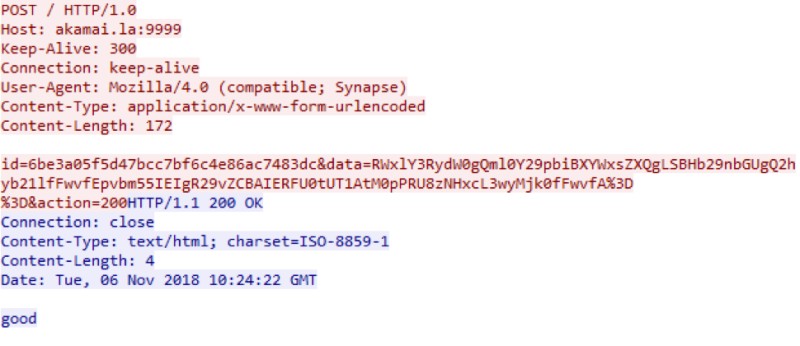
Security research has found XMRig in several attack chains. One campaign used an official release with its settings left in the open. Another embedded the miner inside a Docker dropper. A third used the same public XMRig file that a careful person might download on purpose.
Attackers like this because the victim supplies the chip and the electricity. The attacker keeps the payout wallet. A 2018 Red Canary report noted that attackers often needed only the ability to run code, not root access, and could move through trusted admin tools after the first breach. That makes unauthorized mining a resource hijacking problem, not just a strange app on your desktop.
Redis and LibMiner Container Break-Ins
LibMiner showed how a miner could become part of a wider container and Linux attack. It could deploy XMRig, move through systems, target unprotected Redis servers, and make cleanup hard. The first infection step was not known in the research, so the case is a warning about what happened next, not a full recipe for the first entry.
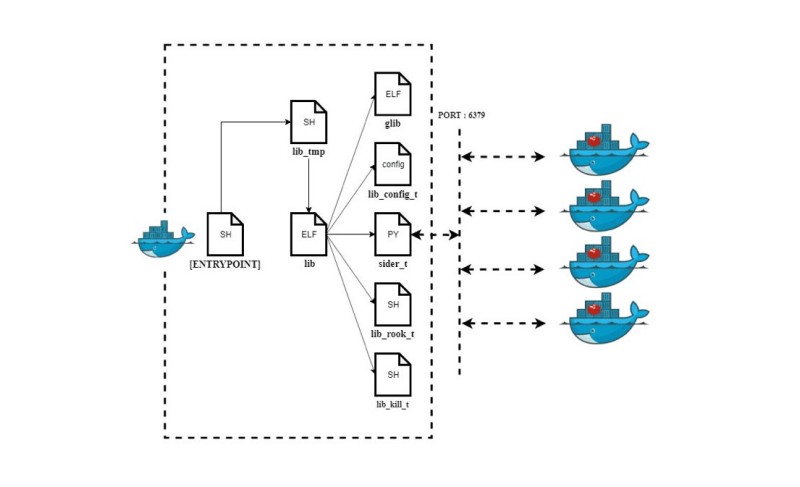
The LibMiner chain described by Qualys
- A Docker entry point ran a Bash script when the container started.
- The script made a cron job, changed the hosts file, and used cURL or Wget to fetch more code.
- It looked for Tencent Cloud Aegis and Alibaba Server Guard, then removed their processes and files.
- It changed the DNS settings, hid a packed ELF binary under a random name, and fetched fresh components.
- It scanned unprotected Redis servers on port 6379 and tried to write cron content through Redis.
- It created cleanup code and a service named symcfget, then launched XMRig with a pool and wallet.
The Redis attempt was not a clean success in the observed case. Database-specific bytes kept the written cron content from running as intended. That detail matters. An attack can still expose a weak service and leave other malware paths behind, even when one payload fails.
The lesson for a home lab or server is plain: do not leave Redis open to the network. Protected mode, blocked outside access, package updates, and limited root access make the service less useful as a launch point.
Docker Remote API and Tor Mining
An exposed Docker Remote API can give an attacker more than a mining container. Without the right access controls, the person may be able to create a privileged container, mount the host's root folder, install a backdoor, and run a miner without downloading every tool separately.

The Docker attack sequence
- The attacker queried the Docker API for containers.
- The attacker created an Alpine container with the host root mounted for writing.
- A Base64-encoded shell command set up Tor and fetched a hidden onion-hosted script.
- The script changed SSH settings, added an authorized key, and sent a beacon with the victim's IP and system type.
- The attacker downloaded a compressed binary for the victim's architecture, unpacked it, and launched the embedded miner.
The script installed masscan for scanning, packet tools, Zstandard for compressed files, and torsocks for Tor traffic. It also enabled root login and added a public SSH key to the host. The miner was bundled inside the downloaded binary, with its wallet, pool, and run settings already included. The miner name was not the weak point. The open Docker service was.
DevOps Servers as Miner Launch Points
The JINX-0132 campaign used another lesson from cryptojacking: public tools can be turned into a launch point. Researchers saw official XMRig code downloaded from public GitHub repositories instead of a custom miner host. The actor changed the wallet and the target service, so ordinary files could hide the campaign inside normal admin traffic.
Four exposed services in the research
- Nomad: an unconfigured job API could let a remote user create jobs that ran on registered nodes.
- Consul: service health checks could contain Bash commands, so an open registration path could launch code.
- Docker: an unauthenticated Remote API could create a container, mount the host, and start a miner image.
- Gitea: old releases, enabled Git hooks, weak user permissions, or an unlocked installer could open a path to code execution.
The cloud sample in the report included Consul in more than 20% of environments and Docker in 80%. Among the relevant DevOps tools, 5% were exposed directly to the internet, and 30% of those exposed deployments were misconfigured. The report also found thousands of exposed Consul and Nomad instances, with hundreds in major cloud providers.
Size did not save the targets. Some compromised Nomad installations managed hundreds of clients and held CPU and RAM worth tens of thousands of dollars each month. A basic config error could still hand an attacker a costly mining setup to rent out.
Linux Mining Scripts and Fake Services
A Microsoft Azure report described Linux attacks that began with an internet-facing service. The compromised service account ran a shell command that decoded Base64 text and sent it to Bash. More than 30 scripts shared the same general structure, which gave defenders a way to connect infections.
Signs in the Linux mining scripts
- Standard output was sent away so the command made less noise.
- Common system paths were added before tools were run.
- The scripts contacted onion and Tor-related sites.
- They searched shell history, hosts files, and SSH known-hosts files for new targets.
- They created an hourly cron job and a file dressed up like a systemd service.
- They tried to use Ansible, Chef Knife, Salt, and similar admin tools for movement.
The fake service used the name systemd-ntpdate and copied timestamps from a normal system file to make it look less new. The attacker could then use existing SSH keys and passwordless admin paths to move between hosts. These attacks could look like ordinary administration unless someone connected the service exploit, encoded script, and mining process.
DarkGate Mining With More Than a Miner
DarkGate is a reminder that a miner can be only one part of a larger break-in. A 2018 report described a campaign delivered through torrent files that posed as movies and TV shows. It could mine, steal wallet credentials, run ransomware, and give human operators remote control.
The four-stage DarkGate path
- A VBScript dropper placed AutoIt and other files in a hidden computer-name folder.
- AutoIt created a startup shortcut and loaded an encrypted binary into memory.
- The code adjusted its execution method based on whether Kaspersky was present.
- A final payload hollowed out system processes, then fetched a miner command and executable.
The miner itself ran through a hollowed systeminfo.exe process. DarkGate also searched for wallet and exchange windows, captured clipboard and keyboard data, and used NirSoft tools inside hollowed processes. The danger was not just a high load number. It was the attacker's access to credentials, money, and the machine itself.
Defenses for Exposed Miner Targets
Hey, don't skip this part. A secure miner choice means nothing if the host has an open Redis port, a public Docker API, or an admin service that accepts jobs from anyone. The best cryptocurrency miner still needs a host that the owner can actually control.
Controls that block the attack paths in the research
- Redis: run it in protected mode, block outside clients, keep packages updated, and limit root access. Use the Redis-without-authentication check to find exposed servers.
- Docker: keep the API internal, avoid public binding on ports 2375 or 2376, require trusted access, run containers as application users, and audit images and containers for mining tools.
- Nomad: configure its access rules so unauthenticated users cannot create or run jobs. Public API access should not equal permission to execute code.
- Consul: keep script checks disabled, restrict the HTTP API to trusted locations, and enable access rules for service registration and health checks.
- Gitea: update old releases, keep Git hooks disabled unless needed, lock the installer, and review open registration and user permissions.
- Linux hosts: keep internet-facing services patched, change default passwords, use tighter access rules, watch for load spikes, and review cloud credentials and SSH keys.
Do not assume that killing one XMRig process ends the problem. LibMiner fetched fresh copies, cleaned up old files, and created a service for later runs. If a host may be hit, review Docker containers, Redis writes, cron jobs, new services, SSH settings, authorized keys, and the parent process that started the miner.
Signs of an Unauthorized Cryptocurrency Miner
I would start with the machine that suddenly got hot, slow, or busy. A miner name is useful, but it is not enough. Some attacks used the official XMRig release, and the wallet could be changed for each campaign.
miner behavior to check
- Sustained CPU or GPU use with no matching job
- XMRig or another known miner process
- A new wallet address or a connection to a Monero pool
- Process hollowing into systeminfo.exe, vbc.exe, or regasm.exe
- Base64 text piped into Bash
- New cron jobs that call Wget or cURL
- Services named symcfget or systemd-ntpdate
- Root SSH keys or a new rule allowing root login
- Connections to onion addresses or Tor tools
- Scanning or connection attempts on Redis port 6379
- Unexpected SSH sessions between hosts
- Admin commands from tools that are not installed on the host
Start with the parent process, then trace the child command, wallet, pool, and persistence files. Compare the process history with Docker events, Redis changes, cron entries, and SSH logs. A single odd file can be noise, but several of these signs together point to an unauthorized miner rather than a normal desktop test.


Comments on “Which Cryptocurrency Miner Is Best? Tools, Profit, and Risks”
No comments yet. Be the first to share your thoughts.