
What to Know Before You Invest in Cryptocurrency Without the Hype

What Cryptocurrency Actually Is
Cryptocurrency, or crypto for short, is a digital asset that lives only on computer networks called blockchains. A blockchain is a shared ledger spread across many computers. Each computer, called a node, holds a copy of the transaction record. They agree on which transactions are valid and update the ledger together. This design makes unauthorized changes hard to pull off, but it does not stop bugs, hacks, human error, or failures in the underlying code. Public blockchains let anyone see the data, though the amount of useful info varies a lot from project to project.
Crypto markets run 24/7. Prices react to supply and demand, market sentiment, tech developments, macro conditions, and regulatory changes. Like stocks, bonds, gold, or real estate, crypto assets carry the possibility of loss. Digital assets are a broader bucket that includes anything of value existing mainly in digital form - cryptocurrencies, tokens, and assets that represent access or claims on real-world items. A handful of countries have recognized specific cryptocurrencies as legal tender, meaning the government officially accepts them for paying debts and taxes.
The Big Names You Keep Hearing
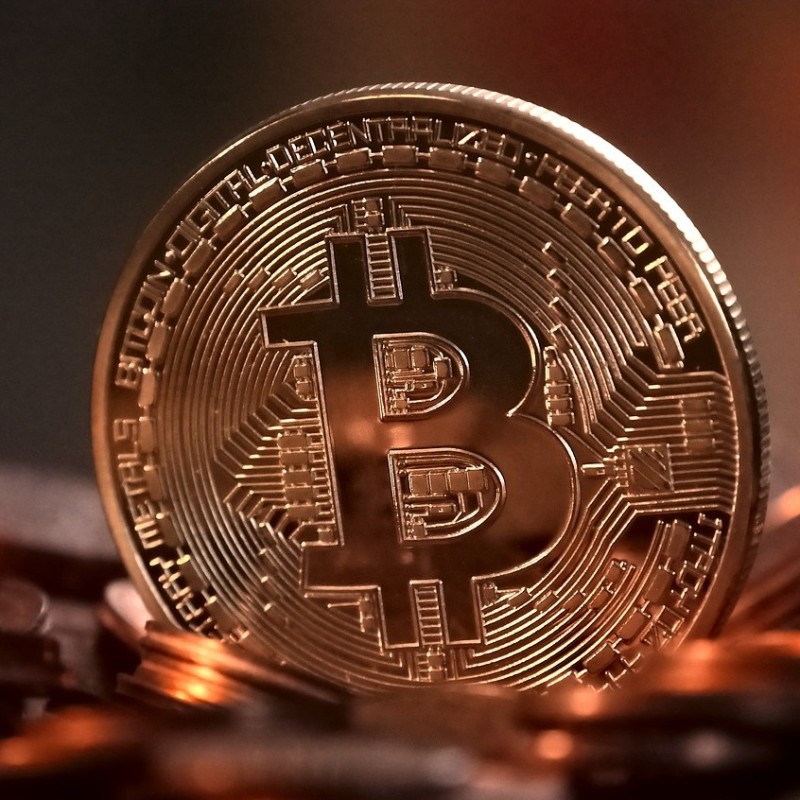
Bitcoin (BTC) was the first cryptocurrency and remains the most widely recognized by market cap. A whitepaper titled "Bitcoin: A Peer-to-Peer Electronic Cash System" appeared under the name Satoshi Nakamoto in late 2008. The identity behind that name is still unknown. The first Bitcoin blockchain transaction happened in early 2009 when the starting block was mined. Mining creates new units and verifies transactions. Bitcoin's total supply was programmed into its code and cannot be changed - the final bitcoin is expected to be mined around 2140.
In 2024, the U.S. SEC approved spot bitcoin exchange-traded funds. This let investors get bitcoin exposure through regulated products and made bitcoin available through more traditional financial channels. Some people think bitcoin's limited supply and growing adoption could support its value over time. Others see it as a high-risk asset that can drop sharply. Companies like MicroStrategy, Tesla, Block, and Coinbase have added bitcoin to their corporate holdings.
This investment reflects our belief that Bitcoin, as the world's most widely-adopted cryptocurrency, is a dependable store of value and an attractive investment asset with more long-term appreciation potential than holding cash.
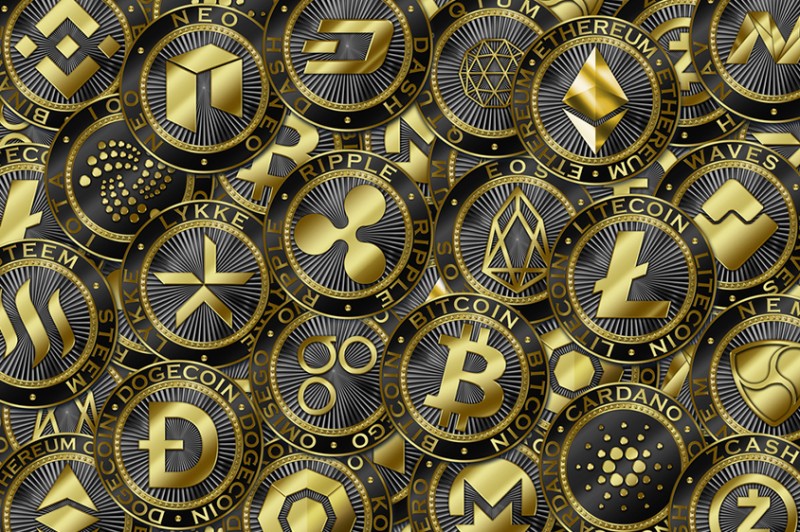
Ethereum (ETH) is a blockchain network built to support smart contracts - programs that run on the blockchain and execute automatically when predefined conditions are met. They're used in decentralized finance (DeFi) and other applications. Solana (SOL) is another smart-contract network designed for lower latency and higher throughput. Thousands of alternative cryptocurrencies, often called altcoins, have been created since Bitcoin, each with different features, uses, adoption levels, and risks.
How Crypto Differs From Regular Money
Fiat currencies like the U.S. dollar or euro are government-issued. A central bank (the Federal Reserve in the U.S.) manages the system, sets key interest rates, and aims for stable prices and employment. Fiat moves through banks, payment networks, and financial institutions. It's widely used daily, but transfers can be delayed by banking hours, weekends, compliance checks, or intermediary systems.
Cryptocurrencies like Bitcoin and Ethereum run on decentralized networks without a single company or government controlling everything. This can mean faster global transfers and fewer traditional middlemen. Consumer protections, dispute procedures, and recovery options may differ from what banks and brokerages offer. Crypto markets never close, while many traditional institutions operate only during set business hours. Some crypto transactions settle in minutes or seconds. Cross-border use can be especially useful where conventional banking access is limited, transfers are slow, or currency controls create barriers.
A stablecoin is a crypto asset designed to maintain the value of a targeted currency, usually the U.S. dollar or euro. They're used for payments, trading, and moving funds between platforms. But their relative price stability does not eliminate reserve, issuer, liquidity, regulatory, smart-contract, or devaluation risks. Legislation like the GENIUS Act has established clearer federal requirements for certain fiat-backed stablecoins, including reserve and oversight standards, intended to improve transparency and consumer protection.
The Volatility Problem Is Real
Crypto has produced large gains for some assets and major losses for others. Bitcoin, ether, and other projects have seen major price increases, but past gains do not guarantee future returns. Some cryptocurrencies have lost some or all of their value. Price volatility can happen within hours or days. A 2014 Ethereum Foundation analysis reported that bitcoin holders lost about 67% of their wealth over eleven months, with prices often moving 25% in a single week. Those figures describe that period, not current performance, but the pattern persists.
The main drivers of price movement include supply and demand, investor sentiment and media attention, technological development or failure, network usage, macroeconomic conditions, interest rates, regulatory decisions, security incidents, leverage and liquidations, and market manipulation. A long-term holder may see temporary gains that later vanish. Short-term traders can get forced out after a decline. A big price rise can spark excitement and draw more buyers, while a big fall can trigger panic selling, margin calls, and reduced confidence.
Crypto generally remained more volatile than many traditional asset classes, although the degree varied among individual cryptocurrencies.
Risk tolerance is the amount of risk and uncertainty you can personally stomach. It affects whether an investment feels manageable. You might view crypto as a small high-risk slice of your portfolio, while someone else rejects it because the volatility doesn't fit their goals or financial situation. Ask yourself: can you maintain a long holding period? How much of your net worth would be affected? Are your emergency savings secure? How would you respond to a large rise or fall?
Security and Custody Risks You Cannot Ignore
Crypto has potential uses in financial inclusion, cross-border transfers, and payment access, but security problems have limited wider acceptance. The risk comes from both decentralized code and centralized services like exchanges, custodial wallets, and payment processors. Bitcoin was initially called "essentially unhackable," but later incidents showed that the security of a cryptocurrency investment depends on the entire system. An exchange can be compromised even if the underlying blockchain hasn't been rewritten. A wallet can fail because a user reveals a key. A smart contract can contain a code defect. A stablecoin issuer can become insolvent.
Mt. Gox, a Japanese exchange, once controlled over 70% of global bitcoin trades. Attackers allegedly siphoned funds while the exchange and customers were unaware. Between 2011 and 2014, they stole 840,000 BTC - worth over $450 million at the time and tens of billions later. Mt. Gox filed for bankruptcy in February 2014, and clients permanently lost their coins. Other incidents include a 2016 attack on the Ethereum-based DAO that siphoned $60 million, a Bitmart exchange attack in late 2021 with a reported $200 million loss, and a Crypto.com attack in early 2020 that drained about $15 million.

Smart contracts automate actions when conditions are met. Bugs can stay hidden and let attackers transfer assets, mint tokens, or drain funds. Many participants with varying programming experience write smart-contract code, and fully securing complex contracts is tough even for experienced developers. DeFi adds interconnected dependencies - a protocol may depend on an oracle, token contract, bridge, governance system, lender, stablecoin, or validator. A defect in one component can cascade.
Then there are 51% attacks. In proof-of-work and proof-of-stake networks, a participant or group controlling enough computing power or token stake could alter transaction ordering or validate unauthorized transactions. Bitcoin would require control of at least 51% of its total processing power - a massive equipment and energy demand. Ethereum has suffered a successful 51% attack involving slightly over $1 million, and smaller networks face even greater danger. Investors themselves are targets too - scammers use fake support accounts, phishing links, fraudulent platforms, impersonation, malware, and promises of guaranteed returns.
Scams, Fraud, and Market Manipulation
Crypto-related scams come in many flavors. Rug pulls - where a project creates hype, raises funds, and disappears. Fake customer-support messages asking for private keys or login credentials. Social-media promotions promising high or guaranteed returns. Ponzi schemes using newer investors' money to pay earlier ones. Pump-and-dump schemes promoting an asset before insiders sell. Phishing sites imitating exchanges or wallets. Impersonation of celebrities, executives, government agencies, or platform reps. Fake investment platforms showing fabricated balances. Cryptojacking malware using your computer to mine crypto. ICO projects collecting funds without delivering. Manipulation through wash trading, spoofing, or coordinated purchases.
The CFTC lists market manipulation and fraud as key digital-asset risks. Wash trading can create the appearance of activity without real ownership change. Large players can use their holdings to move prices in ways that benefit them before reversing. Offers of more than 100,000% annual returns are highly suspect - few have a sound economic basis. Search for prior reports, warnings, complaints, and reviews before investing. Treat unsolicited social-media messages as suspicious. Many scam victims share their experiences online - that history can be reviewed before buying a token or joining a platform. Telegram and similar services contain fraudulent accounts posing as platform representatives.
If you owned all the bitcoin in the world, you'd have nothing.
Forrester CEO George Colony published a skeptical take in 2023. He described cryptocurrency as a digital coin existing only in a computer program, arguing programmers can change its rules. He said merchant adoption remains limited and many merchants convert crypto to fiat before accepting it. In his view, crypto is a speculative asset more akin to tulips than a productive commodity. He identified three forces driving the market: greed, youth, and technology. Visible overnight wealth draws new participants, many young traders don't understand the systems, and the technology's opacity makes risks hard to assess. He also cited techno-utopians, grifters, Reddit participants, paid celebrity promoters, venture capitalists, libertarians, billionaires, and what he called a mostly uncritical, cheerleading media.
Regulation, Legal Status, and Taxes
Regulation differs by country. Governments have approached crypto through adoption, experimentation, restrictions, taxation, anti-money-laundering rules, or prohibition. Regulatory uncertainty includes different token classifications (securities, commodities, stablecoins, payment instruments), changing tax and reporting requirements, different rules for exchanges, wallets, miners, lenders, and issuers, uncertainty over securities registration, varying limits on institutional participation, changes in tax treatment, and new compliance requirements affecting access to exchanges or payment services.
In the U.S., a 2022 executive order directed agencies to study strategies for protecting crypto investors, addressing illicit use, and supporting responsible digital-asset development. The SEC, CFTC, banking regulators, and federal lawmakers continue to oversee or clarify aspects of digital assets. The 2024 SEC approval of spot bitcoin ETFs created a regulated route for bitcoin price exposure without necessarily holding bitcoin in a personal wallet. Crypto held directly is generally not an FDIC-insured deposit or SIPC-protected brokerage asset. Platform-specific protections depend on the legal arrangement.
Tax rules have evolved. Selling crypto for more than its tax basis may create a taxable capital gain. Trading frequently can create more taxable events and higher transaction costs. Jurisdiction, holding period, income, deductions, and whether an asset is treated as property or currency all affect the result. El Salvador recognized bitcoin as legal currency. China prohibited crypto trading and mining in 2021. Argentina's severe inflation drove some residents to use crypto to preserve value, bypass controls, and transact internationally. Companies in the EU and UK have introduced crypto payment cards on a limited basis. Regulatory status is geographic and jurisdictional, not uniform.
How Crypto Stacks Up Against Stocks, ETFs, Gold, and Real Estate
Stocks represent ownership in companies. They often connect to fundamentals like revenue, earnings, profits, and cash flow, but can also move on momentum, headlines, interest rates, or economic conditions. Stocks can fail when a company becomes insolvent or loses value. They have longer operating histories than most crypto projects but are not risk-free. ETFs hold baskets of assets and trade like a single stock, providing diversification. Spot bitcoin ETFs give bitcoin-price exposure without requiring you to operate a wallet. Fund expenses, management fees, trading commissions, and bid-ask spreads reduce returns.
Gold is a physical commodity used as a store of value. Investors can buy physical gold, gold-backed funds, or shares of gold-mining companies. Gold has a long market history and sometimes appears in diversified portfolios. Its price fluctuates with supply and demand, interest rates, inflation expectations, currency markets, and economic conditions. Gold does not produce dividends or interest. Bitcoin and gold share a limited-supply narrative and can compete as potential stores of value, but they behave differently. Gold has physical uses, mining costs, industrial demand, established custody systems, and a long investment history. Bitcoin has network-based issuance, programmed supply, technological dependencies, and a shorter record.

Sources disagree about what crypto fundamentally represents. Some describe bitcoin as a decentralized monetary system, store of value, hedge against currency weakness, or long-term alternative to fiat. Others describe cryptocurrency primarily as a speculative market asset. George Colony compared crypto to tulips and argued it lacks a general-purpose productive role. Other sources emphasize its utility for peer-to-peer transfers, cross-border settlement, smart contracts, DeFi, and decentralized applications. A cryptocurrency can provide functional value without producing cash flow like a stock, bond, rental property, or dividend-paying business. Its investment case may depend primarily on scarcity, adoption, network effects, liquidity, regulation, and demand.
Costs, Taxes, and Accounting Headaches
Crypto-related costs include blockchain network fees paid to miners or validators, exchange trading fees, bid-ask spreads, withdrawal or transfer fees, payment or deposit fees, gas fees for smart-contract and DeFi transactions, slippage when orders execute at different prices than expected, tax preparation costs, and losses from market orders during rapid volatility. The number of transactions matters - a frequent trader may pay more in fees and taxes than a long-term holder. Traditional assets also have costs: brokerage commissions, bid-ask spreads, ETF or mutual-fund expense ratios, management fees, bank and account fees, and taxes on realized gains. Small percentage fees can have a significant effect over many years.
Accounting for crypto has been messy. Under old U.S. GAAP rules, cryptocurrency was generally accounted for as an intangible asset - recorded at cost, tested for impairment, with impairment reducing the carrying amount. Later price increases could not restore previously written-down value. This captured some downside but failed to reflect large unrealized gains. A 2024 update (ASC 350-60) changed this: in-scope crypto assets are now measured at fair value, with changes recorded in the income statement. Businesses holding or transacting in crypto need to evaluate whether an asset is in scope, the appropriate fair-value measurement, timing of valuation changes, income-statement presentation, disclosure requirements, and custodial arrangements.
Doing Your Homework Before You Commit
A crypto project often publishes a white paper explaining the problem it's solving, how the network works, how tokens are created and distributed, how usage generates demand, who controls the software, how transactions or votes are validated, how upgrades are approved, and what happens if the project fails. White papers can help, but they're produced by the project team. They may emphasize benefits while minimizing risks, use unexplained technical language, make unverifiable claims, or describe incomplete features.
Traditional asset analysis looks at revenue, profits, cash flow, debt, earnings, management, and valuation. Crypto research may examine network usage, active addresses, developer activity, node count, hash rate or stake distribution, validator concentration, token distribution, insider holdings, security history, smart-contract audits, exchange support, partnerships, regulatory status, competitive projects, token utility and supply changes, and public or private information requirements. Blockchains often provide public transaction records, but translating those into economic value is hard. A project may have little public info about revenue, users, obligations, or ownership. Disclosure methods differ, creating information asymmetry.
Due-diligence questions worth asking
- What problem does the asset actually solve?
- Who controls the network and who can change the rules?
- How are transactions validated?
- What happens if validators or developers stop participating?
- What are the token-supply and emission rules?
- How much supply is held by insiders or early investors?
- Is the network active or merely maintained?
- Has the code been audited?
- Have there been exploits, outages, or governance disputes?
- Is the asset liquid and how large are trading spreads?
- Can you secure the private keys and is a recovery plan available?
- Are there known regulatory or legal disputes?
- What happens if the project team disappears?
Personal Factors That Should Drive Your Decision
Whether crypto fits your broader strategy depends on your financial goals, investment horizon, income stability, near-term savings, existing debts, emergency reserves, tolerance for large losses, emotional response to volatility, amount you could lose without disrupting essential goals, need for stable income, diversification, concentration in one project, tax and reporting obligations, understanding of the technology, and custody and security arrangements. A portfolio can be harmed by concentration even when it looks diversified by token count. A collection of projects dependent on the same blockchain, exchange, stablecoin, mining economics, or regulatory treatment may still be concentrated.
Crypto may fit within a diversified portfolio for some investors, but should not be the only asset held. One guide stated that cryptocurrency should not be the entire portfolio because of volatility and regulatory uncertainty. A professional financial adviser can help evaluate risk capacity, portfolio allocation, tax consequences, and custody - though advice doesn't remove market risk or guarantee results. Starting with small amounts can limit the financial effect of an error or price decline, but small amounts also limit possible gains and don't eliminate loss risk. Some platforms let you begin with as little as $1 and use transaction roundups to allocate small amounts from everyday purchases.
The sources repeatedly advise committing only money that can be lost.
How the Buying Process Actually Works
A beginner's process generally includes: learning how cryptocurrency and blockchain systems work through books, articles, technical docs, and project materials; researching available cryptocurrencies - thousands exist and they don't share the same technology, adoption, liquidity, security, or prospects; selecting an exchange based on reliability, security controls, fees, available assets, payment methods, custody arrangements, and regulatory status; creating an account and completing identity verification; depositing funds via bank transfer, debit or credit card, or another cryptocurrency; buying at market price or using a limit order for a specified price; deciding whether assets stay in exchange custody or move to a wallet you control; and protecting account credentials, private keys, recovery phrases, devices, and authentication codes.
Limit orders control the maximum purchase price but may not execute if the price isn't reached. Market orders execute immediately at available prices but may expose you to wider spreads and price movement. An Initial Coin Offering (ICO) is the crypto equivalent of an IPO - a project sells tokens to raise funds. Buying an ICO exposes you to project, offering, legal, technical, liquidity, and fraud risks. People participate in crypto markets by buying and holding long-term, trading short-term price movements, using DeFi applications for lending or borrowing, holding stablecoins for payments or transfers, or acquiring crypto-related assets through regulated products like spot bitcoin ETFs. Long-term holding still requires attention to security, tax, custody, and project risks. Short-term trading adds market orders, bid-ask spreads, slippage, leverage, rapid losses, transaction costs, and frequent tax reporting.
Common Questions People Ask
Quick answers to frequent questions
- Why do some consider crypto a good investment? Historical growth in some assets, limited or programmed supply, growing adoption, blockchain technology, decentralized financial applications, digital ownership, potential alternative to unstable fiat, possibility of high returns. None guarantee future performance.
- Why do some consider it a poor investment? Volatility, short history, regulatory uncertainty, security failures, scams and manipulation, high fees, difficult valuation, lack of consistent disclosure, technology dependence, potential total loss, difficulty determining when prices are high or low.
- Is crypto too volatile? It's known for large price swings over short periods. More volatile than many traditional assets, though individual cryptocurrencies differ. Institutionalization and ETFs may have reduced recent volatility in some segments, but rapid and severe price movements remain possible.
- Can crypto lose all its value? Yes. A project can fail, an asset can lose demand, an exchange can collapse, a protocol can be exploited, or a token can be overtaken by another technology.
- Is crypto regulated? Regulation differs by country and activity. Some governments prohibit crypto, some adopt it as legal tender, others permit trading with tax reporting, licensing, disclosure, or AML requirements. In the U.S., securities, commodities, stablecoins, payments, banking, and consumer protection involve different agencies.
- How does crypto compare with stocks and bonds? Stocks represent company ownership analyzed through earnings, revenue, profits, cash flow, management. Bonds represent debt paying interest. Both have longer operating and regulatory histories than crypto. Crypto offers blockchain-based functionality but has a shorter record, different valuation methods, greater tech dependence, and different consumer protections.
What to Check Before You Put Money In
The sources emphasize these areas: personal goals and investment horizon, risk tolerance and emergency savings, existing portfolio concentration, legal and tax treatment, technology and smart-contract risks, token supply and insider ownership, exchange security and liquidity, wallet custody and private-key protection, network activity and developer work, scam and manipulation history, trading fees, spreads, and taxes, and the possibility of total loss. Investing in cryptocurrency involves risk, including loss of principal. Prices can rise or fall sharply, and some projects, exchanges, or tokens can fail entirely.
If you're wondering how to get started with crypto , the steps above outline the basic path. But the real question is whether putting money into digital assets aligns with your situation. Some people research the mechanics of buying and holding for weeks before committing a dollar. Others look at how digital assets behave alongside equities to gauge correlation. There's no universal single approach that works for everyone - your risk tolerance, time horizon, and financial cushion matter more than any strategy.
When friends ask whether crypto is secure , the honest answer is: the technology has strong cryptographic foundations, but the ecosystem around it - exchanges, wallets, bridges, smart contracts, and human behavior - introduces plenty of failure points. A position in bitcoin might behave differently than a basket of altcoins. And treating digital assets as a portfolio component requires different monitoring than a set-and-forget index fund. The relationship between traditional equities and crypto shifts over time - sometimes they move together, sometimes they don't. Learning the mechanics is the easy part. Deciding if it belongs in your financial life is the harder conversation to have with yourself.


Comments on “What to Know Before You Invest in Cryptocurrency Without the Hype”
No comments yet. Be the first to share your thoughts.