How To Find The Best Crypto Miners For Mining At Home Quietly Without Selling A Kidney
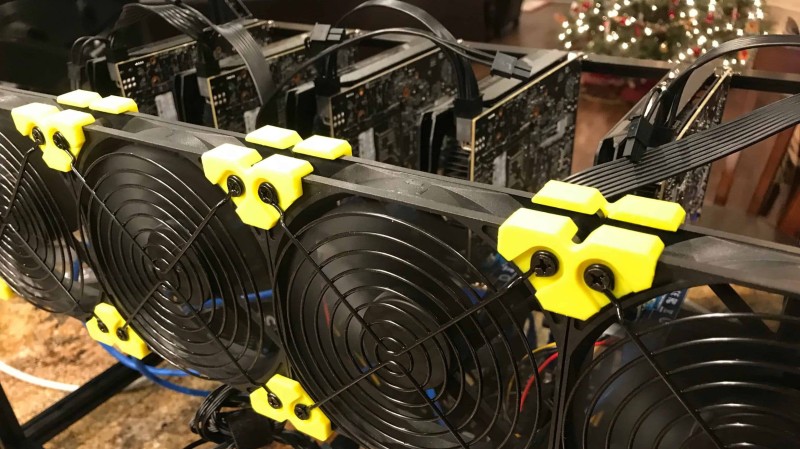
How To Find The Best Crypto Miners For Mining At Home Quietly
You don't need a basement full of loud machines to feel like a crypto person. I've been reading up on the best crypto miners for mining at home and the good news is small gear exists now. A few years back, mining meant big warehouses and bulk power deals. Now a regular person can run one or two machines on a home circuit. And your spouse does not have to leave over the electric bill, though I'd still keep an eye on that.
The short version: the best crypto miners for mining at home are low-power ASICs and a couple of small projects you can actually live with. The NerdQaxe and Antminer S21 show up a lot in the specs. I'll walk through what I found, what's quiet, and what will not make you eat ramen forever.
What Is Crypto Mining And Why People Do It At Home
Some folks ask what crypto mining even is before they buy a box. It's like gold mining but with computers. Instead of pickaxes, your machine solves math problems that keep a network like Bitcoin or Kaspa safe. Transactions get bundled into blocks. Miners race to solve a puzzle. The winner gets coins.
This uses the Proof of Work model. More computing power means a better shot at the block reward. After Ethereum moved from Proof of Work to Proof of Stake, GPU mining dropped hard in profit, around 90 percent. So most home users now look at ASICs, which are chips built for one job. If you want to know what is the purpose of crypto mining , it's securing the chain and earning a bit if you win.
Mining with an ASIC is easier than GPU mining from setup: power it, connect to internet, type pool address and wallet, it mines.
ASICs Versus GPUs For The Home User
GPUs used to be the standard. People stuffed graphics cards into open frames and mined Ethereum. That's mostly done now. ASICs are made for one algorithm, like SHA-256 for Bitcoin or Scrypt for Litecoin and Dogecoin. They do one thing and they do it well.
Not every ASIC fits a home. Many are big, loud, and hungry for power. But more models now aim at home users, with noise under 55dB. That's about the level of a quiet chat. A miner crypto machine that sits at 40dB is something you can keep in a home office without losing your mind.
Why mine at home instead of a crypto miner farm
- Lower start cost, one unit is enough to begin
- You control when it runs and when it stops
- You own the process, not some opaque cloud contract
- Less overhead, no rent or industrial cooling bill
Low Power Mini ASICs From NerdMiner
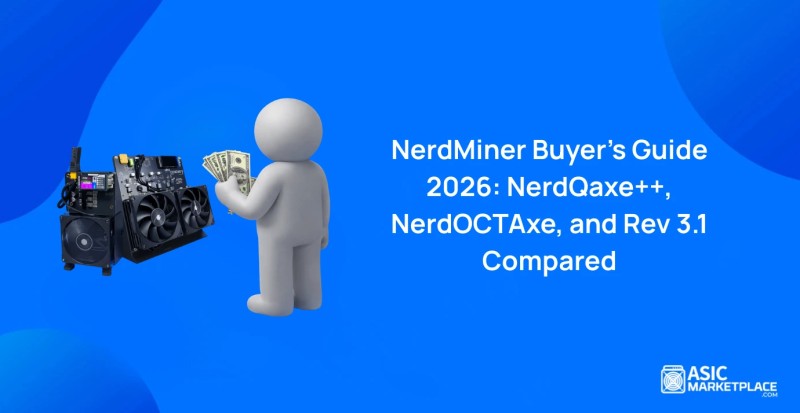
NerdMiner makes tiny Bitcoin ASICs using SHA-256. They aim for low energy and low noise. The line includes NerdQaxe++, NerdOCTAxe, and NerdOCTAxe Rev 3.1. These are good picks if you want the best crypto miners for mining at home without a server room.
The NerdQaxe++ is the small one. It does 4.8Th/s at 72W. Noise is 40dB. It has WiFi and uses the BM1370 chip. Price is around $309. No warranty after delivery, which is a bummer but common in this space. It's a quiet low-power box for a beginner.
NerdQaxe++ Versus NerdOCTAxe
The NerdOCTAxe comes in two types. One does 9.6Th/s at 160W. The other does 12Th/s at 240W. Noise is 45dB, a bit more than the Qaxe++. It has WiFi or Ethernet. Price for the 9.6Th model is about $519. The Rev 3.1 bumps to 12Th/s with two fans and 40dB noise. Price is around $619.
Here's the thing, the source lists a power conflict on Rev 3.1. One spot says 240W, another says 120W balanced. I'd treat 240W as the safer number until you see the unit. All three use the BM1370 chip. None come with a warranty. That part matters, don't skip it.
Quick compare of the three NerdMiner models
- NerdQaxe++: 4.8Th/s, 72W, 40dB, $309, WiFi
- NerdOCTAxe 9.6Th: 9.6Th/s, 160W, 45dB, $519, WiFi or Ethernet
- Rev 3.1 12Th: 12Th/s, 240W per table, 40dB, $619, Ethernet
- All use BM1370, all have no warranty, all are small home boxes
NerdQaxe++ is fantastic for home solo miners, reduces power bill, quiet.
Other Small Home ASIC Miners Worth A Look
Outside NerdMiner, some other home boxes show up. The Iceriver AE1 Lite mines Aleo at 300 MH/s, 500W, 45dB. The Goldshell E-AE1M does 230 MH/s at 2000W, 50dB. The Avalon Q is a SHA-256 Bitcoin miner at 90 TH/s, 1674W, 45dB. It's stable and built for home use.
There are also cheaper bits like the Bitaxe Gamma 601 at $42, the Starminer NerdQaxe++ Rev 6.1 at $188, and the Canaan Avalon Nano 3S at $299. If you're a crypto beginner , those small ones are a low-risk way to learn. The big caveat is they earn tiny amounts, so treat them as fun, not income.

Bitmain Antminer S21 Series For Home And Farm
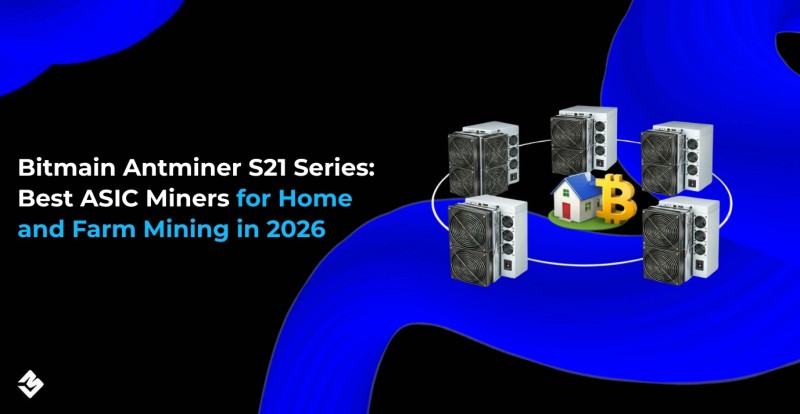
The Antminer S21 line from Bitmain is strong SHA-256 gear. Models are S21, S21 XP, S21 Pro, S21+. The S21 does 200Th/s at 3500W. Noise is 75dB. Price runs $2,000 to $2,500. That's loud for a living room but okay for a garage or a crypto miner farm setup.
The S21 XP hits 270Th/s at 3645W, 76dB, $4,000 to $5,000. The Pro does 234Th/s at 3510W. The S21+ does 216Th/s at 3564W. All need a 240V circuit because of the power draw. If you run one at home, plan the electric first.
Which Antminer Fits A Home User
For home mining, the base S21 is the one most people point to. It's the cheapest of the line, still compact, and uses less power than its siblings. But 75dB is not quiet. You'll want it in a garage or basement with good air.
The source says beginners should look at the S21, mid farms at the Pro, and large setups at the XP. Bitcoin block rewards dropped after the 2024 halving to 3.125 BTC, so efficient gear matters more now. A miner that sips power beats one that gulps it when rewards are smaller.
Antminer S21 family at a glance
- S21: 200Th/s, 3500W, 75dB, $2,000 to $2,500
- S21 XP: 270Th/s, 3645W, 76dB, $4,000 to $5,000
- S21 Pro: 234Th/s, 3510W, 76dB, $3,500 to $4,000
- S21+: 216Th/s, 3564W, 76dB, $3,000 to $3,500
Solo Mining With A Small Box
Solo mining means you keep the whole reward if you win. The NerdQaxe++ at 4.8Th/s and 72W is a solid solo home miner. It's quiet and cheap to run. The Rev 3.1 at 12Th/s is for people with more power access and more patience.
Pool mining is the other path. You join others and split the wins. It's steadier. The Qaxe++ can do pool via WiFi easy. The OCTAxe with higher hash has better pool odds. A mining rig used for solo at home is usually just one quiet box, not a wall of fans.
Solo mining gives full control of earnings.
A Raspberry Pi Project That Teaches Blockchain
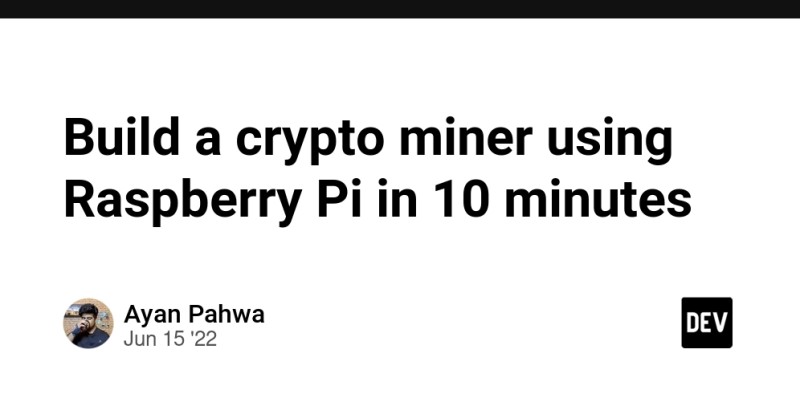
If you want to learn without much cost, a Raspberry Pi 4 can mine Monero. Monero uses Proof of Work but wants CPU mining to stay spread out. The Pi won't make you money. It's a school tool. A Pi 4 with 4GB RAM gets about 99 H/s. A Pi 3 gets 20 H/s.
You need a wallet from getmonero.org, an SD card, power, and internet. Software deploy is via balenaCloud. The pool in the guide is xmr.2miners.com:2222. This shows what does cryptocurrency means in practice: a chain kept alive by many small players, not just big farms.
An Old GPU Rig Built For Ethereum
A 2017 home GPU rig shows how people used to do this. It had six GTX 1060 cards on an open frame, drawing about 516W. Hashrate was 133.7 MH/s on Ethereum. Profit was around $10 to $12 a day back when ETH sat near $450. Noise was 50 to 53dB.
That rig is history now. GPU mining fell off after Ethereum changed to Proof of Stake. ASICs took over for the coins that still use Proof of Work. But the build is a good teacher on heat, power, and why noise adds up fast.
Home Setup: Power And Circuits
Most home circuits safely handle a miner up to 1200W. Above that, you need a dedicated circuit. The Avalon Q at 1674W needs its own line. The Antminer S21 at 3500W needs 240V. Use surge protectors, skip extension cords. Check with an electrician if you're not sure.
ASICs throw heat. You need air moving through the room. A garage or basement works. Some folks put boxes on a balcony with a filter to keep dust out. One engineer ran two 500W miners on a condo balcony off a 15A 120V outlet, and still had power left for an espresso maker.
Setup checks before you plug in
- Know your circuit limit before buying a miner
- Use a surge protector, not a long cord
- Keep the area clear of flammables
- Unplug before you clean or open the box
Noise And Where To Put The Miner
Noise is the silent killer of home mining marriages. A single home miner under 55dB is fine. The NerdQaxe++ at 40dB is one of the quietest. The Avalon Q at 45dB is okay. The Antminer S21 at 75dB is loud, put it where you don't sit.
Multiple units stack noise. A basement or garage helps. Some hosting spots take your machine and give you power and cooling for a fee per kWh. That solves noise and heat if your home can't take it. It's not legit cloud mining though, you still own the box.

Pools, Software, And How Payouts Work
Pool mining joins many hashers to find blocks more often. For Bitcoin, pools include Antpool, F2Pool, Slush Pool, Poolin, and BTC.com. Pick by fee, payout type, and stability. Fees run 1 to 3 percent. Payout types are PPS or PPLNS.
NiceHash gets a mention as paying better than a direct pool in some cases. You connect the ASIC via browser to NiceHash. For Monero, the example pool is xmr.2miners.com:2222. The binary crypto puzzle your machine loops on is just finding a number that fits the block rule.
Pool terms you'll see
- PPS: paid per share, steadier
- PPLNS: paid per last N shares, swings more
- Fee: 1 to 3 percent taken by pool
- Worker: the name your miner uses in the pool
Electricity Is The Real Boss
Electricity is the biggest cost you'll pay every month. A 600W rig running all day uses about 14.4 kWh. At ten cents a kWh, that's $1.44 a day. Cheap power is the difference between profit and a sad closet of warm metal.
A well-picked machine on cheap power can net $100 to $300 a month from one device. Efficiency matters, lower W per TH is better. Network difficulty and coin price shift your return. The S21 XP example with cheap power showed high daily net, but that needs low electric rates to hold.
Machine efficiency, W/TH lower better.
Cloud Mining And Hosted Options
Some people look at cloud mining to skip the noise. There are cloud mining services that rent you hash, but many are shady. Hosting is different: you own the ASIC, a facility gives power and cooling, you keep the coins. That's clearer than a cloud contract where you don't see the box.
Home mining is hard for a lot of people due to cost, space, noise, and heat. Hosting fixes those but adds a per-kWh fee. If your home rate is high, hosting can beat running it yourself. Just read the contract, don't trust a pretty site.
Buying Tips So You Don't Get Burned
When you buy, get an ASIC that supports multiple coins on one algorithm. Scrypt covers Litecoin and Dogecoin. SHA-256 covers Bitcoin. Avoid a machine that outpaces others by 5 to 10 times, difficulty will spike and kill profit.
Safe bets are SHA-256 or Scrypt. Buy from the maker or a verified reseller. The source points to Antminer S, L7, and WhatsMiner M as examples. If a deal looks too good, walk. A cheap box with no warranty and no docs is a paperweight.
What to check before you pay
- One algorithm, multiple coins if possible
- Noise level under 55dB for home
- Power draw fits your circuit
- Source is maker or verified reseller
Keeping The Machine Alive
Maintenance is simple but needed. Blow out the fans and heatsinks with compressed air. Update firmware from the maker. Check the power supply. Watch the temperature, most like 0 to 45°C. Listen for weird noise. Check the Ethernet link.
Do a daily look, a weekly clean and update, and a monthly deep check. The Antminer guide says the same. A clean miner runs cooler and lasts longer. And a dead miner is just a space heater you paid too much for.
Routine: regular cleaning, firmware updates, inspect PSU, monitor temperature.
Picking The Best Crypto Miners For Mining At Home
So what's the best crypto miners for mining at home pick? If you want quiet and cheap, NerdQaxe++ wins for most. If you want more hash without huge power, NerdOCTAxe 9.6Th is a fair middle. If you have power and want max, Rev 3.1 or Avalon Q fit.
If you have a garage and 240V, the Antminer S21 is the home farm start. Loud, but it works. The Raspberry Pi is for learning, not earning. And the old GPU rig is a museum piece now. Your call depends on budget, space, power, and how much noise your house will take.

Comments on “How To Find The Best Crypto Miners For Mining At Home Quietly Without Selling A Kidney”
No comments yet. Be the first to share your thoughts.