A Practical Guide to New Crypto Coins, Projects, and Risks Before Buying
New Crypto Coins: How to Spot Worthy Projects Safely
New crypto coins are easy to find and hard to judge. A launchpad, a price chart, a large social account, or an exchange listing can make a project look ready before the facts are in. The pitch may be huge: new technology, fast growth, early access, a chance at “the next big thing.” I would slow down. The first job is not to guess which token will jump. It is to work out what the project does, who is behind it, and what can make you lose the money you put in.
I keep one rule in mind: every claim needs a source. That means code, working docs, clear token terms, visible developers, real liquidity, and proof that the product exists. If I cannot find those things, the project is still an idea, not an investment I understand. That standard matters when you search for what crypto coin to buy , because a search page can give you a name long before it gives you proof.
Why New Crypto Projects Arrive With a Story
Most new crypto coins begin as a story about what might happen. The team says it will change payments, rewards, AI, finance, gaming, or the internet. Evidence may come later, if it comes at all. A token can have an AI label, sit on an exchange, appear through an API, or launch on a new stablecoin platform and still face weak security, legal trouble, or poor control of reserves.
Four signs that still need proof
- An AI label names a theme, not a working product.
- An exchange listing shows market access, not that a project can pay its bills or follow the law.
- An API listing shows platform support, not safe contracts or real reserves.
- A launchpad badge may mean someone screened the pitch, not that you are protected from loss.
Those labels are clues, not answers. I would use each one to ask better questions. Scams, abandoned chat groups, copied plans, and dead coins fill the same search pages as real work. Cross-check the project’s site, code, contract, developers, and outside sources. If the team will not explain its purpose or answer basic questions, that silence matters.
Where to Find Early Crypto Projects
Data sites are a good first stop. CoinMarketCap, CoinGecko, ICO Drops, Token Metrics, and Top ICO List can show new listings and projects marked for an upcoming sale or launch. A list of crypto coins can help you build a watchlist. For each new cryptocurrency on it, I would open the official site and contract page before reading another price post.
Places to look for project leads
- Data aggregators can narrow the field and sort projects by date or launch status.
- Binance, Coinbase, and Kraken can show which assets have reached broader exchanges.
- QuickLaunch, Seedify, ChainGPT, AI TECH, BullPerks, and TrustSwap are named as launchpads.
- X, Reddit, Telegram, and Discord can hold project news, questions, and technical discussion.
- GitHub repositories, testnets, and developer forums can show whether work is taking place.
Social channels can help, too. On X, follow developers and investors with work I can check, and watch terms such as “IDO,” “seed round,” and “TGE.” Reddit groups, Telegram rooms, and Discord servers can hold useful answers, but they can also fill with spam and coordinated posts. Tools named in the source include Token Sniffer for Solana, BSCCheck, DEX Screener, CoinGecko, and DEX Tools. Emoji-heavy posts, vague answers, and hype with no working product are bad signs. If I cannot explain the project in plain words, I am not ready to buy its token.
What Early Access Can and Cannot Offer
Early access is often sold as a rare chance to get into new crypto coins before a broad public listing. The rewards can include an airdrop, staking, governance rights, an ambassador role, a community tier, or direct access to the core team. Whitelisting and presale access may come with a lower price. None of those perks proves the project will last. TrustSwap Launchpad Director Sundeep Siripurapu put the case for early research this way:
Finding quality projects before they get listed allows us to get in at lower valuations. When successful, such projects tend to do well and give asymmetric rewards to the supporters.
That sounds fair, but it leaves out the other side of early access. An early entry can give a much bigger gain if the project works, but the reward can be lost just as fast. You may have to complete noisy tasks, lock funds, follow promotion rules, or act before the contract is clear. Searches for coins that might explode often lead straight into this pressure. A low entry price can make a bad project cheaper, not safer. FOMO turns research into a race, and that is when a scam or weak contract is easiest to miss.
Team, Product, and Real Work
A project should be able to name its developers or explain why anonymity cannot be avoided. The source treats unexplained anonymity as a major warning sign. Backers and advisers can add evidence, but a famous name is not a substitute for code, product history, or open questions. I want to know who makes decisions, who controls the treasury, and whether the people making claims are the people building the product.
Evidence I want before taking a token seriously
- A named team with work or a history that I can check.
- A working product rather than only a whitepaper and brand.
- A public contract address and source code that match the official site.
- GitHub commits, releases, and technical docs spread over time.
- A usable testnet, product feedback, or other proof of delivery.
- Backers and advisers whose roles and ties are clear.
- Updates that explain goals, delays, and what the team actually finished.
A roadmap made entirely of promises is not the same as demonstrated progress. A live testnet does not prove safety, and active code does not prove good business sense. It does show that the team has done more than draw a logo. For new crypto coins, I would compare the roadmap with shipped releases, usable docs, working partnerships, and product feedback. If the project cannot show what it has already delivered, I would treat the rest as a promise.
Tokenomics and Wallet Control
Tokenomics tells you how many tokens exist, who owns them, and when more can enter the market. Start with total supply and circulating supply. Then look at allocations for the team, investors, treasury, community, and other holders. Check vesting and unlock schedules, inflation or emission rates, and the controls over treasury funds. Those details can decide whether early buyers have room to sell or whether a few holders can push the price down.
The source gives 30% or more in one wallet as an example of a concentration warning. That number is not a magic line, but it is a useful prompt to keep digging. Check whether the wallet belongs to the team, treasury, investor, or market maker, and whether its power is disclosed. The same goes for unlock dates and inflation. A token can have a fair story and still be built so that a few wallets control the vote or the sell pressure.
Contracts, Audits, and Liquidity
Smart contract code needs its own review. A project may publish a contract-verification link, an audit, and technical docs. That gives you more to inspect. It does not prove the code has no flaws. It also does not check every price feed, bridge, wallet, or lending market the project may touch.
Contract and market checks
- Compare the deployed contract address with the official site and docs.
- Find the source code, verification link, and any audit.
- Check who performed the audit and which parts of the system it covered.
- Look for controls over minting, burning, upgrades, and admin powers.
- Check how asset and price data are supplied and whether those sources can fail.
- Review liquidity locks, pool control, trading volume, withdrawal limits, and chain dependence.
The existence of an audit does not establish that a contract is free from flaws, but the absence of basic verification is a warning sign.
Liquidity deserves the same care as code. Ask whether liquidity is locked, how the pool is set up, who can remove it, and what withdrawal limits apply. Look at trading volume, pool concentration, and whether the market depends on one chain or platform. A vague launch plan is not proof of depth. If buyers cannot enter or exit when they need to, even a working product can trap funds.
Hype, Community, and Paid Attention
A community is useful when it asks hard questions, points out real limits, gives product feedback, and keeps talking after paid promotion stops. A crowd of bots, canned replies, and repeated posts is not the same thing. Follower totals and account counts can be bought or padded, so they tell you very little on their own.
Signs that attention may be manufactured
- The team cannot explain the project’s purpose in plain words.
- Posts are packed with hype and emoji but little useful detail.
- Many accounts repeat the same message without adding questions or evidence.
- Promoters do not say whether they were paid.
- Developers dodge technical questions or block critics.
- Countdown clocks and pressure replace a clear sale process.
People often search the fastest-growing cryptocurrency , then new crypto projects with huge potential . They may also be looking for the best crypto for short term gains . I understand the pull, but growth and hype say little about safety or lasting demand. Ask who is paying the promoters, whether the product can be tested, what the token does, and how that function can create demand. New crypto coins can trend because people talk about them, not because the work holds up.
What Launchpads Can and Cannot Fix
Launchpads can cut some of the work. The better ones collect projects, review tokenomics and business plans, ask for clearer team and distribution details, and pass findings to users. They may offer token locking, liquidity locks, fair-launch rules, refund policies, and direct talks with the core team. Those are real steps, not magic.
Launchpads can reduce some avoidable research and security risks. They do not remove market losses, project failure, hacks, regulatory action, or hidden problems.
You still have to read the terms and check whether the locks and policies are real. A sale with a launchpad badge is not a promise of repayment. Early buyers can still be dumped on, developers can still vanish, and an audit can miss the weak spot. The useful question is not whether a platform is famous. It is whether the checks fit this project, and whether you can still verify the claims yourself.
Exchange and API Access Is Not Due Diligence
Adding an asset to an exchange or API makes it easier to trade. It does not tell you that the issuer can pay its bills, the team is honest, the contract is safe, or the token has a real function. A small source error shows why reading matters. In the supplied Alpaca announcement, the text says 11 assets were added but names only ten: Cardano, Arbitrum, BONK, Filecoin, Hyperliquid, Lido DAO, Ondo, POL, Render, and dogwifhat. The missing eleventh asset is not named.
Questions to ask about an API-listed asset
- Which legal entity operates the service and reviewed the asset?
- Does the token name, chain, and contract address match across reliable sources?
- What liquidity, trading volume, and withdrawal conditions apply?
- Which licensing terms and location limits apply to me?
- What account protections, insurance, and third-party access rules actually exist?
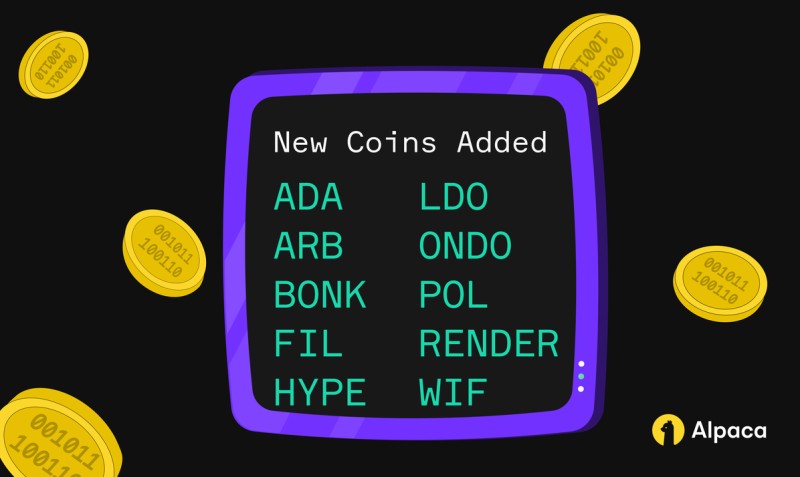
In that announcement, Alpaca described market, limit, and stop-limit orders along with fractional trading. Those are service claims, not guarantees about each coin. The disclosure also warns that automated systems can face outages, bad data, missing or duplicate orders, and conditional orders that fail to execute. It recommends testing strategies and watching systems closely. Letting another app reach an account adds access risk, while margin trading can produce losses larger than the deposited money.
New Stablecoin Platforms Need the Same Checks
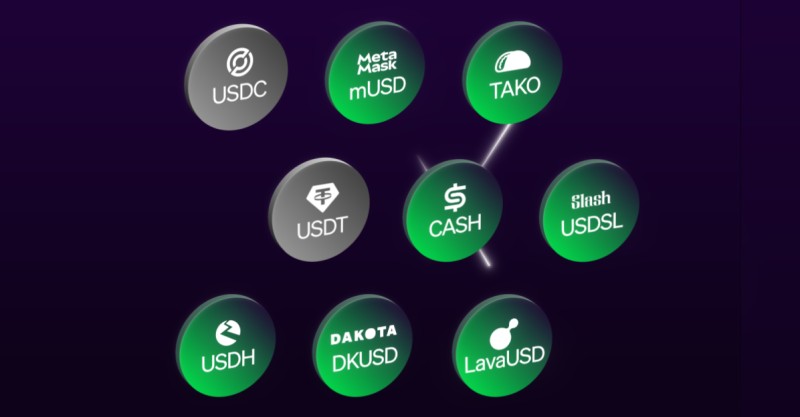
Stablecoins add another layer. Bridge describes Open Issuance as a way for a business to issue and manage its own new crypto currency . The business can choose supported chains, contract features, and the mix of reserves. Bridge also says issuers can create or destroy tokens, earn rewards from reserves, and reach a shared liquidity network. Those features may help a business, but they do not make the asset the same as cash.
Ask who holds the reserve assets, what is included, how redemption works, and what happens if the reserve or issuer fails. The source calls Bridge’s service “GENIUS-ready compliance,” but it does not give detailed licensing terms. Bridge names BlackRock, Fidelity Investments, and Superstate as possible reserve partners. Its example says a user with $10 in Phantom CASH could swap it for $10 in USDH without going through an exchange. That may remove steps, but it does not remove reserve, contract, chain, counterparty, or liquidity risk.
Social Apps Make Token Discovery Easier and Riskier
The Base example in the source pushes this further. Base App is described as a place to post, trade, discover apps, and find tokens inside a social feed. Mini apps run inside that feed, Farcaster powers the social side, and Zora powers the coin attached to posts. The source also says users could buy, sell, and swap millions of onchain coins without leaving the feed. That makes discovery quick. It also puts posts, influencers, tips, rewards, and trades close together.
Checks before using a social crypto app
- Confirm the official app, website, project, and blockchain through more than one source.
- Check the chain and contract address before using a token feature.
- Read what action, signature, or permission the app is asking for.
- See whether the product can be tested and what the test involves.
- Read reward, eligibility, and change terms instead of relying on a post.
- Find out who promotes the project and whether they disclose payment.
Users retain their keys and crypto.
That was a Base claim in the source, and key control matters. It does not verify a token contract, a creator, or a reward. A post with a tip button is not the same as a project with durable demand. Before I trade from a social feed, I check the official link, chain, contract address, asset, and permissions. Searches for free crypto apps or get free cryptocurrency need context too. Testnets, airdrops, and ambassador programs may offer rewards, but an incentive does not remove the need to check the team, token, contracts, and sustainability.
What the KelpDAO and Aave Loss Shows
The KelpDAO exploit in the source shows how new crypto coins can sit inside a much larger system. KelpDAO stakes ETH and gives users rsETH, a receipt token that can be traded or used as collateral. Attackers found a flaw in the OFT cross-chain bridge and created rsETH without putting up the needed ETH. The bridge used a weak check in which one verifier could approve a message. The attackers used the fake receipt token as collateral, borrowed real ETH, and sent the stolen funds through Tornado Cash. The source puts the theft at about $290 million.
A lender can withdraw a token only if an amount of that token is not already lent out and is sitting idle in its liquidity pool.
That rule turned a code flaw into a run. Aave lenders pulled ETH, then other lenders pulled stablecoins. The source reports about $5 billion in stablecoin withdrawals, interest rates near 10%, and an insurance fund worth $80 million to $100 million against exposure close to $200 million. It says $100 million to $120 million in losses could remain after the fund was used. The lesson is that checking one contract is not enough. A bridge, verifier, price source, collateral market, or withdrawal system can carry the hidden risk.
Licensing, Reserves, and Who Takes the Loss
Crypto rules depend on the country, the service, the legal entity, and where you live. The source warns that U.S. residents using platforms such as Bybit, OKX, or BitMEX without the right licensing could face possible charges under Bank Secrecy Act rules and access bans. That is not a blanket judgment about every platform or user. It is a reason to check the exact operator and your own location before signing up or depositing.
The cited Alpaca disclosure says Alpaca Crypto LLC is a FinCEN-registered money services business with NMLS number 2160858. It says the company is not a SIPC or FINRA member and that crypto is not protected by FDIC or SIPC. Those are disclosure facts, not a promise about every place or service. For new crypto coins tied to reserves or lending, find out who holds the reserves, what backs them, who can redeem, and who absorbs a hack or shortfall. Then match the risk to your own finances and get advice from a qualified financial expert when the decision needs one.
A Repeatable Review Before You Buy
A good review should end with notes you can repeat, not a feeling created by a countdown clock. Write down what the project does, who runs it, and what the token controls. Then check each claim against code, docs, market data, and outside sources. If a point stays unclear, keep it in the risk column.
New-crypto-coin review sheet
- Write one plain sentence explaining what the project does.
- Test the product and check whether the docs match what the team claims.
- Confirm the team, advisers, backers, treasury controls, and public contact points.
- Compare the deployed contract with its source, verification page, and audit.
- Check minting, burning, upgrades, admin powers, price data, and outside contracts.
- Read total supply, circulating supply, allocations, vesting, inflation, and unlock dates.
- Map wallet concentration and ask what power the team, treasury, or major holders control.
- Review liquidity, volume, pool concentration, withdrawal conditions, and chain dependence.
- Check the legal entity, licensing terms, reserve custodian, redemption process, insurance, and loss rules.
- Compare paid promotion and community activity with open technical discussion.
- Match every roadmap milestone with a working product, code release, partnership, or clear update.
- Read the file again after the sale clock ends. Pressure is not evidence.

Comments on “A Practical Guide to New Crypto Coins, Projects, and Risks Before Buying”
No comments yet. Be the first to share your thoughts.