
- Order books need a matching counterparty; AMMs always have a pool to trade against
- Order books show depth and specific prices; AMM prices shift with each trade
- Order book DEXs can feel more familiar to CEX users; AMMs are unique to DeFi
- Large trades on AMMs can move prices significantly; order books may not fill at all
How Decentralized Crypto Exchanges Work and Why People Choose Them
13 October, 2026
0 comments
What Are Decentralized Crypto Exchanges
A decentralized crypto exchange lets you trade tokens straight from your wallet without a company holding your funds. You keep your private keys and sign every transaction yourself. The trade happens through code on a blockchain instead of through an account at a centralized platform. This setup goes by the phrase "not your keys, not your crypto" - if you don't hold the keys, you don't really own the assets.
I've seen people call these non centralized crypto exchanges or p2p exchange crypto platforms. The core idea stays the same: you connect a wallet, approve a transaction, and the blockchain settles it. No middleman takes custody. But that also means no customer support to call when something goes wrong.
How a DEX Trade Reaches the Blockchain
Every dex trade starts in your wallet. The wallet holds your assets and signs the transaction without ever showing your private key. That signed message goes to a smart contract - code that lives on the blockchain - which handles the swap, matches orders, or manages a liquidity pool. Once the network includes your transaction in a block, your wallet balance updates and the contract's state changes.
A smart contract is like a legal agreement enforced by code instead of a court. If the conditions are met, the trade executes. If not, it fails.
Not every interface labeled "decentralized" works the same way. Some front ends are run by companies or foundations even though settlement happens through non-custodial contracts. Governance might be concentrated among token holders. Validators and block builders can influence transaction order. The absence of a traditional custodian doesn't mean the absence of every intermediary.
Order Book vs Automated Market Makers
DEXs generally use two main models. Order book DEXs record buy and sell orders and match them when prices align. This can happen fully on-chain or with off-chain matching and on-chain settlement. The trade only executes when a compatible counterparty exists.
Automated market makers work differently. Instead of matching orders, they use liquidity pools funded by other users. You trade against the pool at a price set by an algorithm based on the ratio of assets in the pool. When you buy from a pool, that token gets scarcer and the price moves up. When you sell into it, the price moves down. AMMs let you trade any time without waiting for another person to take the other side.
Key differences between order book and AMM models
Major DEX Platforms You'll Encounter
The source material names several protocols: Uniswap, PancakeSwap, SushiSwap, Curve Finance, Thena, 0x Protocol, KyberSwap, and Komodo Wallet. Loopring operates as a Layer 2 DEX. 1inch functions as an aggregator that searches multiple DEXs for better pricing.
PancakeSwap launched in September 2020 and became the dominant DEX on BNB Chain, handling nearly 90% of total value locked there. Its token CAKE handles rewards and governance. Thena sits as the second-largest DEX on the same chain with its token THE.
Centralized vs Decentralized Exchanges
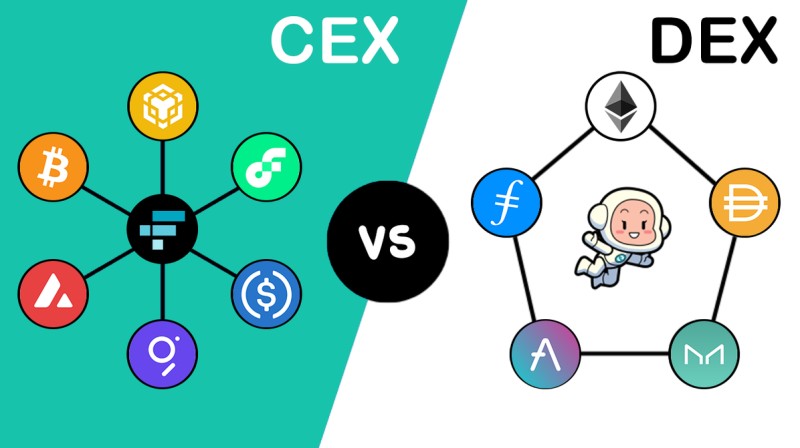
A centralized exchange (CEX) works like a bank. You create an account, deposit funds, and the exchange holds your private keys. Examples include Binance, Coinbase, Kraken, Huobi, and FTX. The exchange matches orders, executes trades, and often acts as custodian, broker, market maker, and clearinghouse all at once.
A DEX replaces that central operator with blockchain code. You authorize transactions from your self-custodial wallet. Smart contracts execute the rules. No single company holds everyone's keys. But removing the operator doesn't remove risk - it shifts it to code, networks, and your own actions.
"No central authority" does not automatically mean "safe."
CEX advantages people mention
- High aggregate liquidity and fast internal execution
- Familiar interfaces with customer support
- Direct fiat deposits and withdrawals
- Account recovery and compliance processes
DEX advantages people mention
- Direct self-custody - you hold the keys
- Fewer account requirements, often permissionless
- Access to long-tail tokens not on CEXs
- Continuous AMM trading without waiting for a match
Control and Custody Differences
On a CEX, the operator controls the private keys for user balances. You trade and withdraw only through their system. They may consolidate customer funds into fewer high-value wallets, creating concentrated targets.
On a DEX, you control your wallet and move funds without asking permission. Your private key signs the transaction. Many DEXs support hardware wallets like Trezor and Ledger. But when you provide liquidity, the pool contract - not the interface operator - controls those deposited assets according to its code. Locking assets in some DEX contracts can add a new form of centralization and security risk.

Security and Failure Modes
CEX security varies. Some have never had a major public incident. Others have lost millions in customer assets. They use cold wallets, hot wallets, two-factor authentication, audits, and sometimes insurance. But online systems stay exposed to attack, and the operator controls the keys.
DEXs reduce the risk that one compromised operator controls every user's balance. They don't eliminate hacking risk. Smart contracts can have coding errors, audit gaps, admin permissions, or exploitable logic. Users can interact with malicious contracts from the start. Tokens on DEXs may not undergo the same review as CEX listings. Rug pulls happen when developers abandon a project after attracting liquidity. Your own wallet, device, seed phrase, or transaction approval can be compromised. MEV and transaction ordering systems can expose pending trades.
DEX transactions generally rely on blockchain finality rather than an exchange's customer-support process. If you send funds to the wrong address or approve a malicious transaction, the operator cannot normally reverse the transfer.
Private key security basics
- Never share your seed phrase or private key
- Keep seed phrases offline - no screenshots, cloud storage, or email
- Use a hardware wallet for large balances
- Use a separate decoy wallet when testing a new DEX
- Verify wallet connection requests only ask for minimum necessary access
- Choose the shortest permission period available (two hours if offered)
Fees and Total Trading Cost
Cost comparisons aren't straightforward. Some say DEX fees are lower because there's no conventional intermediary taking a cut. Others say CEXs are cheaper for regular trades because CEX trades don't require you to pay blockchain gas, while DEXs add gas costs to platform fees. The result depends on the network, protocol, transaction type, trade size, and whether deposit or withdrawal charges count.
CEXs commonly use flat fees, tiered volume-based fees, or maker-taker structures. They may also charge withdrawal, deposit, or network fees. A historical Coinbase example showed a 0.50% taker fee for monthly volume under $10,000 and 0.18% for volume between $1 million and $20 million. Binance offered discounts for paying fees in BNB.
DEXs may charge a protocol or pool fee plus blockchain gas. Aggregator routes can involve fees at multiple pools. Gas fees vary with network demand - higher fees get prioritized, low-fee transactions may stall. On a congested Ethereum network, a low-fee DEX trade might not execute at all. Layer 2 networks can reduce costs by processing off-chain and settling later. Loopring is noted as an affordable Layer 2 DEX because it batches settlement requests.
CEX trades happen inside the exchange's system so you don't pay on-chain gas for each internal trade. But deposits and withdrawals from a CEX still need blockchain transactions. A DEX doesn't have separate CEX deposit/withdrawal fees, but every blockchain operation may require gas.
Liquidity, Slippage, and Market Depth
CEXs often have high liquidity because they aggregate many users and market makers in one order book. This makes large orders easier to execute with less price movement.
DEX liquidity splits across individual pools, trading pairs, networks, and protocols. A pair with low total value may have poor depth even if the DEX overall is active. A large trade can move an AMM pool's price and execute at a different price than displayed - that's slippage or price impact. Large trades can also fail when a DEX lacks enough liquidity near the expected price. Aggregators search several pools but can't create liquidity where none exists.
Liquidity providers earn trading fees but face impermanent loss (where their pool position value changes relative to just holding the assets), smart contract vulnerabilities, token price volatility, adverse selection from informed traders, and rug pull risk if developers act maliciously.
Trading Speed and Network Conditions
CEX market orders usually execute almost instantly when the pair has sufficient liquidity. The exchange updates your internal balance immediately. This makes CEXs more convenient for frequent day trading.
DEX speed depends on the underlying blockchain. An AMM calculates a trade immediately, but inclusion and final settlement depend on network conditions. A trade on a slow or congested chain can be delayed. Low gas fees can leave transactions unexecuted while higher-fee ones get priority. Cross-chain DEXs depend on block times and congestion of both networks involved. Slower chains also limit scalability and throughput. Layer 2 systems improve affordability and throughput but add components like bridges, sequencers, rollups, and settlement mechanisms you need to understand.
User Experience Differences
CEXs are generally easier for beginners. They provide familiar account structures, intuitive interfaces, direct deposit methods, customer service, identity verification, and centralized order books. A new user can buy crypto with fiat and withdraw to a personal wallet without touching a smart contract.
DEXs shift more tasks to you. You may need to create or acquire a wallet, protect a seed phrase, connect the correct network, add a token to the wallet, and select the correct token contract. You must check available liquidity, choose acceptable slippage, set gas and priority fees, review contract permissions, confirm the destination address, wait for blockchain settlement, and protect against phishing. The learning curve feels steep if you're used to a CEX.
Asset Selection and Listing Risk
CEXs control which assets they list. Projects must satisfy listing, compliance, trading activity, legal, and operational requirements. This vetting can filter out higher-risk projects but also reduces availability of new or obscure tokens.
Many altcoins and newly issued tokens exist only on DEXs. An AMM supports a token if someone supplies enough liquidity. This makes DEXs useful for accessing long-tail assets, but the listing is not a quality certification. DEXs often don't vet assets by design. You can encounter worthless tokens, fraudulent projects, and assets with manipulated supply. A token on a DEX may also have unknown or unaudited smart contract code.
Research every token before buying it. Don't purchase solely because a social media contact described it as the next major opportunity.
Privacy, Anonymity, and Censorship Resistance
Many DEXs don't require accounts or personal information, improving privacy relative to KYC-based CEXs. But the blockchain itself remains transparent, and pending transactions are visible in the public mempool before execution. Identity privacy and transaction privacy are separate issues.
Some DEXs are described as less susceptible to government or institutional interference because no single operator controls the platform. But privacy claims vary by protocol and jurisdiction. Some DEXs or front ends implement KYC/AML checks. Some block users in particular jurisdictions or impose IP restrictions. Public smart contract activity, frontend policy, and the underlying blockchain's validator structure all affect the degree of privacy.
Fiat Currencies and On Ramps
CEXs commonly support direct fiat purchases and bank transfers, making them easier for users entering crypto through traditional payment systems. DEXs generally require you to obtain crypto through another service first, then transfer it to a self-custodial wallet.
A common workflow: buy crypto on a CEX, withdraw to your personal wallet, connect that wallet to a DEX. This introduces CEX and blockchain withdrawal fees. You might start with a small amount. The workflow also gives you direct access to a self-custodial wallet - which is the whole point.
If you're wondering how to get crypto wallet set up, you'll need one before using a DEX. Options include Trust Wallet , Trust Coin Wallet , Coinbase self custody wallet , or an Onchain Wallet app . Any digital wallet for cryptocurrency that lets you hold your own keys works.
Geographic Access and Regulation
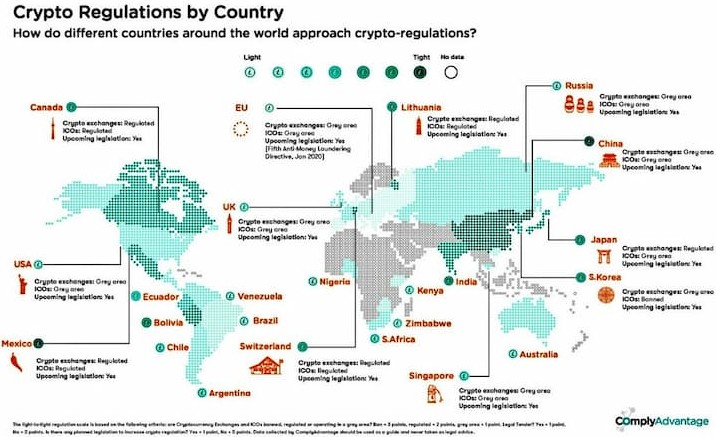
CEX availability is limited by licensing and operational requirements. Users in many countries have few CEX options. Custodial platforms face regulations on customer assets, money transmission, securities, commodities, and financial crime.
DEX rules are less mature because the technology is newer. Some DEXs remain globally accessible without accounts. Others implement KYC, AML, geographic blocks, or IP restrictions. DEXs associate with financial inclusion because anyone with internet and a self-custodial wallet can access them without a traditional financial intermediary. But the absence of KYC/AML requirements raises regulatory concerns.
Liquidity Provision, Staking, and Governance
Providing liquidity isn't required to use a DEX but it's a distinct role. You deposit tokens into a pool and receive pool tokens representing your position. You may earn a share of swap fees. Your position stays exposed to token price changes, impermanent loss, contract risk, and the protocol's strategy.
Some DEXs offer staking and yield farming. PancakeSwap includes these features with CAKE used for rewards and governance. DAOs and token-based governance can influence protocol rules, listing decisions, fee levels, treasury assets, and development priorities. Governance can distribute control among token holders, but concentrated ownership may let a small group exert substantial influence.
Smart Contract and Code Risk
Smart contract risk means the code doesn't perform as expected or contains an exploitable flaw. A poorly coded contract can be drained, frozen, manipulated, or used to transfer unauthorized assets. Specific risks include errors in price calculations, flawed access controls, admin keys that can change functions, incorrect token transfer logic, dependencies on compromised external contracts, unverified price oracles, reentrancy bugs, maliciously designed token contracts, and bridge vulnerabilities.
Audits reduce some coding risk but don't prove a contract is safe. A contract can be technically secure while its token economics, governance, or development team create investment risk.
Token and Rug Pull Risk
DEXs can list a token without centralized exchange approval. You may be unable to determine if the token has legitimate developers, active users, sufficient liquidity, or an audited contract. A project may attract liquidity and then remove it, change controls, or become unusable.
A token's presence in a liquidity pool, its price, and its trading volume don't establish legitimacy. You need to review contracts, project identity, liquidity conditions, and token distribution before trading.
MEV, Front Running, and Back Running
Maximal extractable value (MEV) is value extracted by changing the order of pending transactions. A DEX transaction is often visible before execution, allowing searchers, validators, or block builders to observe opportunities. Front running places a transaction before a known large trade. Back running places one immediately after. Sandwiching combines both around a user's transaction.
Front running exists in traditional markets but is less consistently overseen in blockchain markets. Many blockchain-native parties - developers, validators, block builders - aren't covered by traditional financial regulation. Proposed reductions include faster Layer 2 execution and private mempools (holding areas for unconfirmed transactions). Private mempools can hide pending transactions but may introduce additional intermediaries and trust assumptions.
External Data and Oracle Risk
Some DEXs and DeFi applications rely on external data sources. If a price feed, asset reserve report, or other external source is compromised or outdated, the contract acts on incorrect information. A self-custodial wallet doesn't verify the correctness of every external input a smart contract uses. You must identify which parts of the system are decentralized, which are externally managed, and which failure would affect your transaction.
Network Congestion, Scalability, and Gas Volatility
DEX performance is limited by the blockchain's throughput, block time, finality process, and fee market. Congestion produces higher gas costs, slower confirmation, failed or delayed transactions, and higher costs for interacting with liquidity. Layer 2 networks increase available block space and lower costs but introduce additional components. Cross-chain DEXs may depend on two networks, a bridge, relayer, solver, or other interoperability mechanism.
Governance and Blockchain Native Intermediaries
A DEX may be called decentralized because users retain keys and no company takes custody, but the system still includes specific actors: people who write and deploy contracts, governance participants who change protocol parameters, validators and block builders who process and order transactions, liquidity providers who supply assets, oracle operators supplying external data, frontend operators hosting interfaces, and wallet and infrastructure providers facilitating access.
Developers may retain influence over governance. Validators and block builders may manipulate transaction execution. A protocol can distribute custody without distributing every operational responsibility.
Safe Use Practices for Decentralized Exchanges
A safety guide frames safe DEX use as difficult when there's no central legal entity governing the interface. Core guidance: don't leave money on a DEX, research the exchange before using it, check reviews, and understand how it works. This applies to the frontend, protocol, token, wallet, and network involved.
Before using a DEX
- Research how long the exchange or protocol has operated and who develops it
- Check what blockchain and consensus mechanism it uses
- Verify if code is open source and technical information is available
- Look for audits or other security reviews
- Check for public reviews - absence can be a warning sign
- Test customer support if offered - no response means don't proceed
When you start trading
- Verify the exact domain before connecting your wallet - bookmark it
- Test with a small amount (around $10 equivalent)
- Use a decoy or secondary wallet, not your main wallet
- Wait 3-5 days while learning the interface before trading more
- Learn to connect/disconnect wallet, review balances, identify token addresses, read quotes, submit swaps
- Understand gas settings, approve/revoke permissions, add/remove liquidity
- Learn to locate transaction records and move assets back to a separate wallet
- If the exchange pressures you to trade immediately, walk away
Ongoing safety habits
- Grant only temporary wallet access - shortest period available
- Review token approvals and revoke unnecessary ones
- Withdraw funds after trading - don't use the DEX to hold balances
- Research tokens before buying - avoid unclear contracts or unknown teams
- Don't rely on social media messages, paid promotions, or friends' claims
- Use established platforms and liquid trading pairs
- Protect private keys and seed phrases offline in a secure location
- Use a hardware wallet for large amounts
- Keep a decoy wallet for testing
- Verify addresses and contract info before signing
- Use separate wallets for long-term holdings and active interactions
DEX and CEX Market Roles
The principal claimed advantages of decentralized exchanges include: absence of intermediaries removing risks of centralized control and censorship, non-custodial operation ensuring users retain funds and keys, lower or more transparent costs, greater asset diversity for altcoins, financial inclusion for anyone with internet and a wallet, permissionless operation without traditional accounts, and continuous AMM access.
The principal claimed disadvantages include: smart contract bugs and exploits, low liquidity causing poor execution, public pending transactions creating MEV risk, network congestion raising gas fees, blockchain limits reducing scalability and speed, users managing wallets/keys/transactions, many DEXs lacking direct fiat on-ramps, absence of asset vetting exposing users to scams, and irreversible transactions with limited recourse.
There is no universal exchange type that is better for every user. A beginner who values ease of use, fiat access, and customer support may find a CEX easier. A user who prioritizes self-custody, privacy, direct wallet control, and access to long-tail assets may prefer a DEX. Some users use a CEX to acquire crypto and then transfer it to a self-custodial wallet for decentralized activity.
Market Integrity and Insider Trading
A Solidus Labs announcement introduced a DEX-based insider trading detection product that plots trades in DEX liquidity pools against a database of listing events to identify addresses trading on material nonpublic information. Since 2021, insiders had bought tokens ahead of listing announcements involving more than half of all major crypto exchanges' ERC-20 tokens. This behavior relied on DEXs to trade with pseudonymous wallets rather than KYC'd accounts, allowing evasion of legacy trade surveillance systems.
Centralized exchanges have also faced criticism for lack of transparency, market manipulation, conflicts of interest, insider trading, and poor governance. Both models can have manipulation risks - CEXs through order books and combined functions, DEXs through token listings, liquidity changes, oracle inputs, governance, and transaction ordering. The proposed solution should address both structures rather than treating all risk as unique to one model.
US Crypto Regulation and Self Regulation
An Oxford Business Law Blog analysis described the US crypto regulatory environment as entering a new phase with the SEC announcing a Crypto Task Force. The challenge involves balancing efficiency and investor protection with technological innovation, financial risk, and economic welfare.
CEXs bring together buyers and sellers, often using off-chain order books with on-chain settlement later. They serve as custodians and combine functions of underwriters, brokers, market makers, exchanges, and clearinghouses. Despite performing functions similar to traditional regulated entities, US CEXs are typically regulated as money transmitters - a framework characterized as inadequate for trading platforms.
DEXs operate through smart contracts promising automated execution, autonomous operations, transparency, and reduced custodial risk. But they create different risk categories: code risks (smart contract defects), governance risks (developer influence), transaction ordering risks (validators and block builders), MEV risks (front/back running), asset risks (inadequate token vetting), market structure risks (fragmented liquidity, slippage, compromised oracles), operational risks (irreversible transactions, no recourse), and oversight risks (many blockchain-native parties not covered by traditional regulation).
The analysis proposes a two-tiered self-regulatory model: CEXs as self-regulatory organizations (SROs) setting token listing standards, anti-manipulation controls, insider trading monitoring, and disclosure rules; and a policy-level SRO overseeing the broader framework, developing uniform standards, sharing information, maintaining whitelists of compliant DEXs, monitoring market integrity, and coordinating with legacy regulators. Challenges include regulatory capture, conflicts of interest, opaque rulemaking, and insufficient penalties.
Global and Institutional Infrastructure
Regulatory frameworks for digital assets are developing. Switzerland's FINMA builds on an existing digital asset framework with rules for stablecoins, custody, and crypto service providers. The EU's MiCA framework establishes standards for issuers and service providers with attention to transparency, risk management, and compliance.
SIX operates a regulated central securities depository combining digital and traditional asset services in one infrastructure. It provides one access point for custody, settlement, and asset servicing across digital and traditional assets, uses multi-ledger support to move assets across different distributed ledger environments, and is designed to be asset- and ledger-agnostic. Milestones include becoming active with partners in Q4 2021, issuing the first regulated digital bond in 2022, over CHF 2 billion in securities issued through SDX for institutions including UBS, Commerzbank, and the World Bank, and receiving FINMA approval to provide crypto custody through its licensed central securities depository.
This institutional model focuses on regulated custody and settlement, while DEXs use blockchain contracts and user-held wallets. Both reflect efforts to create market infrastructure for digital assets, but their governance, custody, and access models differ.

Layer 2 Networks and Cross Chain Trading
Layer 2 systems increase Ethereum's available block space and reduce gas costs. They can make DEX swaps more affordable and allow multiple transactions to be processed together. Networks like Loopring batch multiple off-chain settlement requests.
Cross-chain DEXs let you trade assets held on different networks. Execution speed depends on block times and congestion of the networks involved. Cross-chain trades may depend on bridges, relayers, solvers, or other infrastructure. Ethereum users face multichain challenges: determining which chain holds a token, moving assets between Layer 2s, deciding whether a third-party bridge or relayer can be trusted, whether a wallet or app must be manually integrated with every new network, and managing fragmented balances.
These problems increase cognitive overhead and introduce additional trust assumptions. They can also expose users to censorship risk if a relayer, bridge operator, or other intermediary blocks or delays a transaction.
Ethereum Interoperability Layer Proposal
A proposal from the Ethereum Foundation's Account Abstraction team describes the Ethereum Interoperability Layer (EIL), designed to make Ethereum's rollups feel like one unified chain. Users would sign once for a cross-chain transaction without adding new trust assumptions. The system would use ERC-4337 account abstraction and principles from the Trustless Manifesto. Users would initiate and settle cross-Layer-2 actions directly from their wallets rather than through relayers or solvers, preserving self-custody, censorship resistance, disintermediation, and verifiable on-chain execution.
The proposed experience: open a wallet, choose an asset and recipient, initiate a transfer. The wallet determines which chain holds the asset and how it should move. You could mint an NFT, trade an asset, or use a decentralized application without manually selecting every network. EIL compares to HTTP - HTTP made browsers move between interconnected servers; EIL intends to make wallets operate across Ethereum rollups without requiring users to understand every network individually.
The proposal says the system should retain: self-custody (users hold assets and initiate transactions), censorship resistance (no intermediary can block or delay), privacy (no need to reveal IP or intentions to a relayer), verifiability (important logic checkable on-chain or in open-source wallet code), and minimal trust (users transact directly on networks while trustless liquidity providers supply funds without directly interacting with users or seeing their transactions).
"Send, mint, swap - I just do what I want." The proposed infrastructure underneath would consist of a wallet and on-chain protocol transacting across chains without adding new intermediary requirements.
Potential ecosystem effects include wallets and decentralized applications becoming multichain-native by default, new rollups becoming compatible without manual integration for every wallet, developers focusing on applications rather than custom cross-chain plumbing, users having one wallet, one signature, and access to many networks, while Ethereum's self-custody and trust-minimized model remains intact.


Comments on “How Decentralized Crypto Exchanges Work and Why People Choose Them”
No comments yet. Be the first to share your thoughts.